
A clinic Botox visit is not what most people imagine. There is no syringe waiting at the door and no pressure to treat before you have asked your questions. The appointment starts with a conversation about what you are noticing, moves through a careful assessment of how your facial muscles behave, and only reaches the injection itself if the treatment actually fits your anatomy and your goals. For first-timers in Montreal who have read conflicting information online, understanding what happens at each stage is the most reliable way to separate safe, well-planned treatment from generic protocol.
What Happens During a Clinic Botox Consultation

A Botox consultation should feel more like a diagnostic conversation than a sales appointment. The goal is not to match a product to a price point. It is to understand what you are noticing on your face, identify what is actually causing it anatomically, and determine whether neurotoxin is the right tool, the wrong tool, or only part of the answer. Fahimeh approaches this conversation the same way every time: anatomy first, product second.
That process begins with your own words. Fahimeh asks what bothers you, when you started noticing it, and what kind of result would feel right to you. Patients often say they want to look less tired, less stern, or more rested, not bigger, tighter, or obviously filled. That language matters because it guides the treatment plan toward restoration rather than dramatic change. If you tell an injector you want to look refreshed and they propose a plan that would visibly alter your expression, that mismatch is a signal worth paying attention to.
Facial Muscle Assessment at Rest and in Motion
The clinical core of the consultation is a structured assessment of your facial muscles. Fahimeh observes your face at rest and then asks you to perform specific expressions: frowning, raising your brows, squinting, smiling. Each movement tells a different story about which muscles are active, how strongly they contract, and whether the lines they create are still dynamic (visible only during movement) or have already become static (visible even when your face is still).
This matters because neurotoxin treats movement-driven lines, not volume loss or skin quality. A crease that deepens when you frown but vanishes when you relax is a textbook candidate for Botox. A hollow that sits there regardless of expression is a volume or structural issue, and injecting neurotoxin into it will not solve the problem and may create new ones. The assessment distinguishes between these scenarios before any product is discussed. A concern that seems to live in one area may actually start somewhere else, which is why the evaluation covers the full face rather than the single zone you came in worried about.
Medical History Review
Before any treatment plan is proposed, the consultation includes a thorough medical history review. This is not a formality. Certain conditions and medications materially affect whether botulinum toxin is safe for you, and a responsible injector will ask about them directly rather than burying them in intake paperwork. The history covers neurological conditions, muscle disorders, pregnancy and breastfeeding status, allergies to any ingredient in the formulation, medications that affect bleeding or neuromuscular function, and any previous cosmetic treatments and how your body responded to them.
This is also when Fahimeh evaluates whether your expectations align with what neurotoxin can realistically deliver. If you are hoping for a result that requires structural change, volume restoration, or skin resurfacing rather than muscle relaxation, that needs to be surfaced during the consultation, not discovered after an unsatisfying treatment. For a broader overview of how neurotoxins compare to dermal fillers and which tool fits which concern, our guide to dermal fillers and neurotoxins walks through the distinction in detail.
When the Right Answer Is Not Yet
One of the most important things a qualified injector can do during a consultation is advise against treatment. Some first-timers are excellent candidates. Others are better served by waiting, by treating a different area first, or by pursuing an entirely different modality. A patient in their early 30s with barely visible dynamic lines and healthy skin may gain little from neurotoxin at this stage. A patient whose primary concern is midface deflation may need filler or a biostimulatory approach, not Botox at all. A patient with deep static lines that no longer respond to muscle relaxation alone may need a combination strategy.
That restraint is part of safe practice. It is also one of the clearest signs that your injector is prioritizing your outcome over product volume. If you are comparing products and wondering whether different formulations might suit your anatomy, our comparison of Botox vs Dysport explains how an injector selects between them based on diffusion, onset, and treatment area rather than brand preference.
Understanding the Biology Before the Injection
Botulinum toxin type A works at the neuromuscular junction, the point where a motor nerve communicates with a muscle fiber. Under normal conditions, the nerve releases a chemical messenger called acetylcholine, which binds to receptors on the muscle and triggers contraction. Botox temporarily blocks this release. The targeted muscle still receives the nerve signal, but the message cannot fully reach the muscle fiber, so the contraction is weakened rather than eliminated. This is the biological mechanism behind every well-planned clinic Botox treatment, and understanding it is what separates a patient who feels confident from one who feels anxious about a black-box process.
Dynamic Lines vs Static Lines
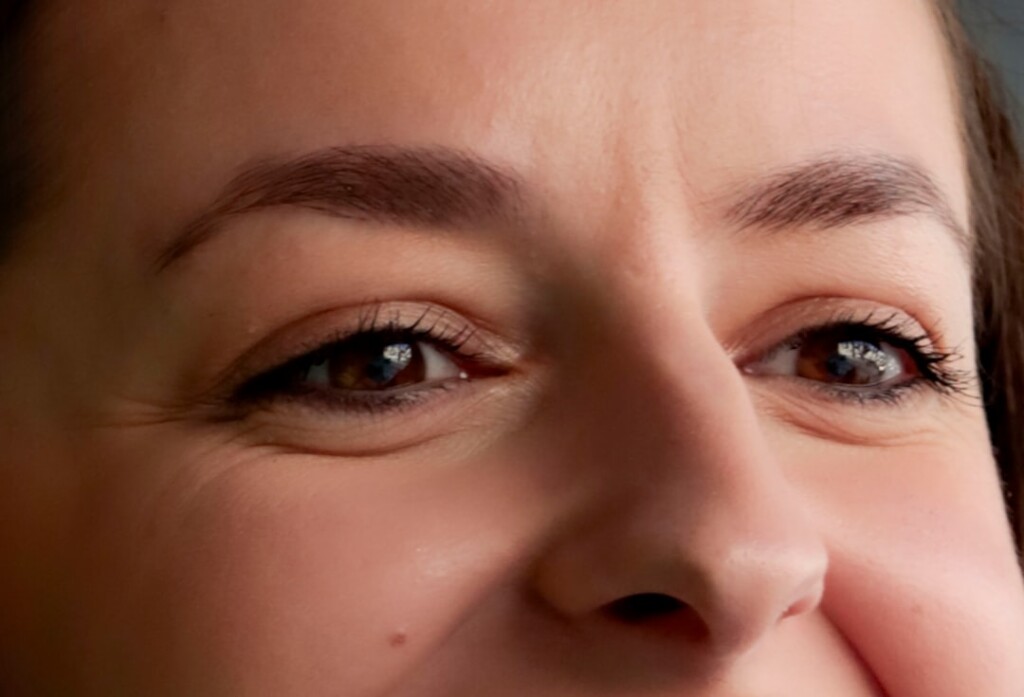
The distinction between dynamic and static lines is one of the most clinically useful concepts for a first-time patient to understand. A dynamic line appears only when a muscle contracts. You frown, a crease forms between your brows, and when you relax, the crease disappears. A static line is visible even when the muscle is at rest, because the skin has been folded along the same line so many times that it no longer fully rebounds.
Neurotoxin is most effective on dynamic lines, where reducing the muscle contraction that creates the fold can soften the crease and potentially slow its progression toward a permanent etch. Static lines may soften with neurotoxin if muscle activity is a contributing factor, but they often require additional approaches, such as skin resurfacing, dermal filler to support the tissue beneath the crease, or time for the skin to remodel once the repetitive folding is reduced. A consultation exists precisely to determine which category your lines fall into, because treating a static line with neurotoxin alone and expecting it to vanish is a setup for disappointment.
Why Precise Placement Matters More Than Dosage
The most common misconception about Botox is that the dose determines the result. In reality, placement is the more critical variable. The face contains dozens of muscles arranged in intricate, interconnected layers, and the difference between a natural result and an overdone one often comes down to which muscle fibers were targeted and which were left alone.
Consider the glabellar complex, the group of muscles between your eyebrows responsible for the vertical lines known as the 11s. Three muscles do most of the work: the corrugator supercilii, which pulls the brows inward and downward; the procerus, which creates a horizontal crease at the top of the nose; and the depressor supercilii, which assists in pulling the medial brow down. These muscles sit close to the brow and eyelid, and unwanted diffusion into adjacent structures can cause a heavy brow or a drooping eyelid. An injector who understands these variations places the neurotoxin precisely into the belly of the target muscle, avoiding neighbouring structures that control brow elevation and eyelid function.
The same principle applies to the frontalis, the broad, fan-shaped muscle that spans your forehead and creates horizontal lines when you raise your brows. Overtreating the frontalis can cause a brow droop because the muscle that lifts the brow is being weakened too aggressively. A conservative dose placed at the right points softens the lines while preserving enough lift to keep your brows in their natural position. Our detailed guide to frown lines Botox and baby Botox dosing covers how these muscles are assessed and why conservative dosing preserves expression regardless of which product is selected.
Poor placement, or a dose that spreads beyond the intended target, is what creates the problems patients fear most: a heavy brow, an asymmetrical expression, an eyelid that sits lower than it should, or a forehead that looks frozen and immobile. The product is not the problem. The mapping is.
The Injection Appointment: Step by Step
If the consultation concludes that Botox is appropriate for you, the injection appointment itself is typically short, calm, and precise. Most first-time patients are surprised by how brief the actual injection portion is, especially compared to the time spent on assessment and planning. The appointment moves through a clear sequence, and knowing what happens at each stage removes the uncertainty that makes first-timers hesitate.
Marking Injection Points
Before any needle touches your skin, Fahimeh marks the injection points based on your individual anatomy. This is not a template applied to every face. The number, location, and spacing of injection points depend on your muscle anatomy, the strength and pattern of your muscle contractions observed during the consultation, your facial symmetry (which is rarely perfect), and the degree of correction that is appropriate for a first treatment.
Two patients with the same concern, say frown lines between the brows, may receive completely different treatment maps. One may have a strongly active corrugator on the left side and a weaker one on the right, requiring asymmetric dosing. Another may have a broad, flat glabellar region where the muscles spread wider than average, requiring points placed farther apart. No two treatment maps are identical because no two faces move identically.
The Injection Sensation
The injection itself uses a very fine needle, and the volume per injection point is small. Most patients describe the sensation as a brief pinch or sting that lasts a second or two per point, not a sustained pain. The number of points depends on the area: the glabellar complex typically requires three to five points per treatment, the forehead may require a similar number distributed across the width of the frontalis, and crow’s feet usually involve two to three points per side.
Some clinics offer a topical numbing cream before treatment. Whether this is necessary depends on your comfort level and the areas being treated. Many patients find that the speed of the injections and the fineness of the needle make numbing unnecessary, but it is a reasonable request if you are anxious about the sensation. Fahimeh typically prioritizes a calm pace so you never feel rushed, which is especially important for a first treatment when you are still learning what to expect.
Typical Duration
The injection portion of a Botox appointment typically takes 10 to 15 minutes. Adding the time for review, cleansing, and aftercare guidance, most patients are in and out within 30 to 45 minutes total. There is no extended recovery period required in the clinic. You can return to most normal activities the same day, with some common-sense precautions covered in the aftercare discussion.
| Stage | What Happens | Approximate Time |
|---|---|---|
| Review and confirmation | Treatment plan discussed once more; you confirm the area, goal, and comfort level | 5 to 10 minutes |
| Photos and cleansing | Reference photos may be taken; skin is cleansed and prepared | 5 minutes |
| Marking injection points | Points mapped to your individual muscle anatomy, not a generic template | 5 minutes |
| Injection | Fine-needle injections at each mapped point; brief pinch per point | 10 to 15 minutes |
| Aftercare guidance | What to expect, what to avoid, and when to call the clinic | 5 minutes |
Why No Two Treatment Maps Are Identical
A treatment map is the specific set of injection points and doses planned for your face. It is built from the assessment conducted during your consultation and refined during the marking phase. Because facial muscle anatomy varies significantly from person to person, the map that works for one patient will not work for another, even if both are treating the same area.
Fahimeh factors in muscle strength (some people have powerful corrugators that require more units, others have delicate muscles that need very little), asymmetry (the left side of your face does not mirror the right), brow position (a lower brow may mean the frontalis needs to be treated more conservatively to avoid a droop), and your goal for how much movement to retain. A prevention-focused patient in their 30s who wants to soften dynamic lines while keeping full expression receives a lighter, more distributed map. A patient with deeply etched static lines and stronger muscle mass may need a more complete treatment. The map is a clinical document, not a guess.
Who Should Not Get Botox (And Why That Matters)
Candidacy screening is not an obstacle to treatment. It is the foundation of safe practice. A clinic that treats every patient who walks through the door is not being accommodating; it is being careless. There are clear medical reasons to defer or decline neurotoxin treatment, and there are clinical situations where a different approach would serve you better. Understanding these does not mean you will be turned away. It means you can trust that the clinic is paying attention.
Pregnancy and Breastfeeding
Botulinum toxin is not recommended during pregnancy or while breastfeeding. There is no established safe dose for these conditions, and the ethical and clinical standard is to defer treatment until after pregnancy and the conclusion of breastfeeding. If you are planning to become pregnant in the near future, discuss that timeline during the consultation so the treatment plan accounts for it.
Certain Neurological and Muscular Conditions
Patients with conditions affecting the neuromuscular junction, such as myasthenia gravis, Lambert-Eaton syndrome, or amyotrophic lateral sclerosis (ALS), are not candidates for cosmetic botulinum toxin. These conditions already impair the communication between nerves and muscles, and introducing a neurotoxin that further blocks that pathway can worsen symptoms. A thorough medical history review is designed to identify these conditions before any treatment is proposed, which is why the history intake is a clinical step, not a formality.
Unrealistic Expectations
Not every contraindication is medical. A patient who expects neurotoxin to produce a structural change that it cannot deliver, or who wants a result that requires altering their facial identity rather than refreshing it, may not be a good candidate at this stage. Botox softens movement-driven lines. It does not restore volume, reposition tissue, resurface the skin, or change the fundamental architecture of your face. If your goal is restoration and your expectations are realistic, neurotoxin may be an excellent fit. If your goal requires a different tool, the most helpful thing an injector can do is tell you that honestly.
When Filler or Skin Treatments Are the Better Answer
Some patients arrive requesting Botox when their actual concern is better addressed by a different modality. A hollow under the eyes that makes you look tired is often a volume issue, not a muscle issue, and may be better served by a filler or a biostimulatory approach. A deep fold beside the mouth may reflect a loss of midface support, where treating the cheek first would address the root cause rather than the symptom. Skin that looks dull, textured, or uneven may need resurfacing or a biologically grounded skin treatment rather than neurotoxin.
This is why the consultation covers the full face. A concern that seems to live in one area may actually start somewhere else. Fahimeh’s approach is to identify the anatomical cause first and then recommend only the treatment that matches it. Sometimes that is Botox. Sometimes it is a combination. And sometimes the honest answer is that what you actually need is not an injectable at all. That restraint is what keeps results natural and patients safe. Social media has made extreme examples feel more common than they should be, but in reality, the safest and most elegant injectable work is often the least noticeable.
Planning Your Visit
If you are in the early stages of research or ready to discuss a treatment plan, we welcome the conversation. Book a consultation with Fahimeh at FAH Signature Clinique to explore whether Botox is the right next step for your goals. You may leave with a personalized plan based on your muscle anatomy and treatment priorities, or with the honest answer that a different approach would serve you better. Either outcome is a valid clinical decision, and the goal is always a refreshed version of your own face, not someone else’s.
Contact FAH Signature Clinique today to schedule a consultation in Montreal and leave with a clearer, clinically grounded understanding of what a well-planned Botox treatment can and cannot do for your face.
Frequently Asked Questions
What should I expect at my first clinic Botox appointment?
Your first appointment begins with a diagnostic consultation where Fahimeh assesses your facial muscle activity at rest and in motion, reviews your medical history, and discusses your goals. If Botox is appropriate, the injection itself takes about 10 to 15 minutes using a fine needle. You will receive aftercare guidance before leaving, and the full appointment typically lasts 30 to 45 minutes.
Does a Botox consultation mean I have to get treated the same day?
No. The consultation is a clinical assessment, not a commitment to treat. Some patients proceed to treatment the same day if the plan is clear and they are comfortable. Others prefer to think it over, and some are advised that neurotoxin is not the right tool for their concern. The consultation exists to inform your decision, not to rush it.
How does an injector decide where to place Botox injections?
Injection points are mapped to your individual muscle anatomy, not a generic template. Fahimeh observes how your muscles contract during specific expressions, notes any asymmetry between the left and right sides of your face, and marks points that target the correct muscle fibers while avoiding adjacent structures. No two treatment maps are identical because no two faces move identically.
Can I be told I should not get Botox during a consultation?
Yes, and that is a sign of responsible practice. Pregnancy, certain neurological conditions, unrealistic expectations, or a concern that is better addressed by filler or skin treatments are all reasons an injector may advise against Botox at this stage. That restraint prioritizes your outcome over product volume and is one of the clearest indicators that your injector is working in your interest.
How soon will I see results after a clinic Botox treatment?
Results develop gradually. Most patients begin to notice softening within 3 to 7 days, with the full effect typically visible by day 10 to 14. You will not walk out of the clinic looking different. The change builds subtly, which is what most first-time patients want: a refreshed look that others may notice without being able to identify why.