
The best age to start preventative Botox is not a number. It is a clinical decision based on whether your facial muscles are already etching lines that your skin no longer fully erases. Some patients see dynamic creases in their late 20s. Others reach their early 40s with minimal lines. The right time to begin depends on your muscle activity, skin quality, and anatomy, not the candles on your birthday cake.
Preventative Botox works by reducing the force of repeated muscle contraction before those contractions carve permanent lines into your skin. The concept is straightforward, but the execution requires individualized assessment. A practitioner who tells you “everyone should start at 25” is not reading your face. They are reading a marketing script. The honest answer requires looking at how your muscles move, how your skin responds, and whether those two factors are creating creases that are beginning to hold.
What Preventative Botox Actually Means
Preventative Botox is the use of botulinum toxin type A to soften dynamic lines before they become static lines. Dynamic lines appear only during movement: when you frown, squint, smile, or raise your brows. Static lines are visible even when your face is at rest. The distinction matters because it defines the entire clinical intent. Corrective treatment addresses lines that have already become permanent. Preventative treatment intervenes earlier, reducing the repetitive folding that eventually etches a crease into the dermis.
Botulinum toxin works at the neuromuscular junction, the point where a nerve communicates with a muscle fiber. Under normal conditions, the nerve releases acetylcholine, a chemical messenger that binds to the muscle and triggers contraction. Botox temporarily reduces this release. The muscle still receives the nerve signal, but the message cannot fully reach the fiber, so the contraction is weakened rather than eliminated. In a preventative context, the goal is to reduce the force of contraction enough that the skin stops being creased along the same line with the same intensity, while still allowing natural expression.
This is fundamentally different from corrective use, where higher doses may be needed to soften lines that are already deeply etched. If you are exploring neurotoxin options, our comparison of Botox vs Dysport explains how different formulations interact with your anatomy and why product choice depends on the treatment area rather than brand preference.
The question patients actually have is rarely “what age should I start?” It is “are my lines already becoming permanent, and is there still time to slow that process?” That is a diagnostic question, and it requires a diagnostic answer.
The Anatomy of Early Lines: Why Timing Isn’t Just a Number

Wrinkles form through a predictable biological sequence. Every time you frown, squint, or concentrate, specific facial muscles contract and the skin above them folds along the same lines. In your 20s, the skin springs back smoothly after each contraction because collagen and elastin are abundant. The fold disappears the moment the muscle relaxes. As you move through your 30s, dermal elasticity gradually declines. The repetitive creasing starts to leave a trace. At first, the line is visible only during active expression. That is a dynamic line. If the muscle continues to contract with the same force and frequency, the crease can deepen enough to remain visible even at rest. That is a static line.
The transition from dynamic to static is the clinical tipping point. Once a line becomes static, it is visible without any movement at all. The skin has permanently deformed along the crease. Preventative Botox aims to intervene during the dynamic phase, when the line still disappears at rest, to reduce the force that would eventually make it permanent.
The Muscles Behind the Lines You First Notice
Patients typically notice three patterns first. The vertical lines between the brows, known as the 11s or glabellar lines, are created by the corrugator supercilii muscles, which pull the brows inward and downward. The horizontal creases across the forehead come from the frontalis muscle, which raises the brows. The fine lines radiating from the outer corners of the eyes, commonly called crow’s feet, are produced by the orbicularis oculi, a circular muscle that surrounds each eye and contracts when you squint or smile.
These muscles do not all behave the same way. The corrugator is small and powerful, creating deep, focused creases in a tight area. The frontalis is wide and thin, creating broader but often shallower lines. The orbicularis oculi is delicate and sits close to the eye, requiring precise placement to avoid affecting adjacent structures. Understanding which muscle is responsible for the line you see determines both whether treatment is appropriate and how it should be dosed.
Why Some People Develop Lines Earlier Than Others
Chronological age is a poor predictor of when lines become permanent. Four factors matter far more:
- Muscle strength: Some people have naturally strong corrugator or frontalis muscles that crease the skin more forcefully with each contraction, accelerating the shift from dynamic to static lines.
- Skin thickness and elasticity: Thinner skin with declining collagen shows creases sooner. Thicker, more elastic skin resists folding longer.
- Sun damage history: UV exposure degrades collagen and elastin in the dermis, reducing the skin’s ability to rebound after each fold. Patients with significant sun damage may see static lines form years earlier.
- Genetics: Facial architecture, muscle insertion points, and skin quality are partly inherited. If your mother developed deep glabellar lines in her 30s, you may have a structural predisposition to the same pattern.
This is why two patients of the same age can have completely different clinical profiles. One may have strong corrugator muscles and thin, sun-exposed skin with visible dynamic lines at 28. The other may have minimal muscle activity and resilient skin with barely visible creases at 38. The first is a candidate for preventative treatment. The second may not be.
Who Is a Good Candidate, and Who Should Wait
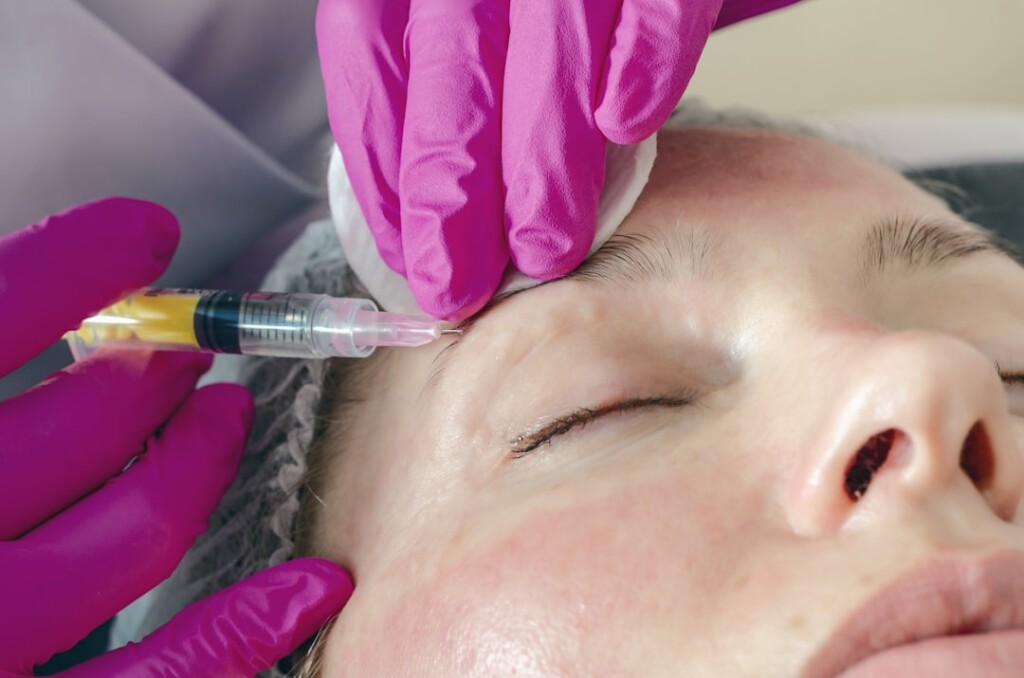
A consultation for preventative Botox should feel more like a diagnostic conversation than a sales appointment. Fahimeh assesses muscle activity at rest and in motion, evaluates skin quality, and looks for the specific signs that indicate dynamic lines are beginning to transition toward static. This is not a checklist where meeting one criterion triggers a recommendation. It is a clinical judgment that weighs multiple factors together.
When Preventative Botox Makes Clinical Sense
Preventative treatment is most appropriate for patients who meet several of these criteria simultaneously:
- Visible dynamic lines during expression that you find bothersome, particularly in the glabellar, forehead, or periorbital regions
- Faint traces of those lines beginning to persist at rest, even if they are subtle and only visible in certain lighting
- Strong or frequently active facial muscles, confirmed through clinical assessment of muscle contraction patterns
- Skin quality that shows early signs of reduced elasticity, making it less likely to rebound fully after each crease
- A family history of deep static lines in the same anatomical region, suggesting a structural predisposition
When Preventative Botox Is NOT Appropriate
Equally important is knowing when to wait. Preventative Botox is not appropriate for every patient who asks about it, and a practitioner who is willing to say “not yet” is one who is prioritizing your outcome over product volume. Treatment is generally not recommended when:
- You have no visible dynamic lines during expression, meaning there is no clinical sign to treat
- You are very young and your skin rebounds fully after each contraction, with no trace of creasing at rest
- Your primary concern is skin texture, tone, or pigmentation rather than muscle-induced lines. These concerns are better addressed with skincare, sun protection, or treatments that target skin quality directly
- Your concern is volume loss or facial deflation rather than dynamic creasing. Neurotoxin softens muscle-induced lines; it does not replace lost volume or restore structural support
- You are seeking treatment primarily because of social media pressure rather than a line you have actually noticed and find bothersome
Social media has made extreme examples feel more common than they are. The reality is that the safest and most elegant injectable work is often the least noticeable. If your lines are minimal and your skin is healthy, the best recommendation may be a solid skincare regimen, daily sun protection, and a follow-up assessment in six to twelve months. That restraint is part of safe practice.
| Clinical Sign | Preventative Botox Appropriate? | What May Be Better Instead |
|---|---|---|
| No visible dynamic lines during expression | No | Sun protection, skincare, reassess in 6 to 12 months |
| Dynamic lines visible only during strong expression, no trace at rest | <tdPossibly, if muscle strength is high and skin elasticity is decliningMonitor and reassess, or treat conservatively if lines are bothersome | |
| Dynamic lines visible during normal expression, faint trace beginning to persist at rest | Yes, conservative dosing is clinically justified | Preventative Botox with low units, longer intervals |
| Static lines clearly visible at rest | Yes, but this is corrective rather than preventative | Higher-dose treatment to soften established lines, possibly combined with skincare or other modalities |
| Concern is skin texture, tone, or pigmentation, not muscle-induced lines | No | Skincare, mesotherapy, PRP, or sun protection guidance |
| Concern is volume loss or facial deflation | No | Dermal fillers or biostimulators to restore structural support |
What a Preventative Treatment Plan Looks Like in Practice
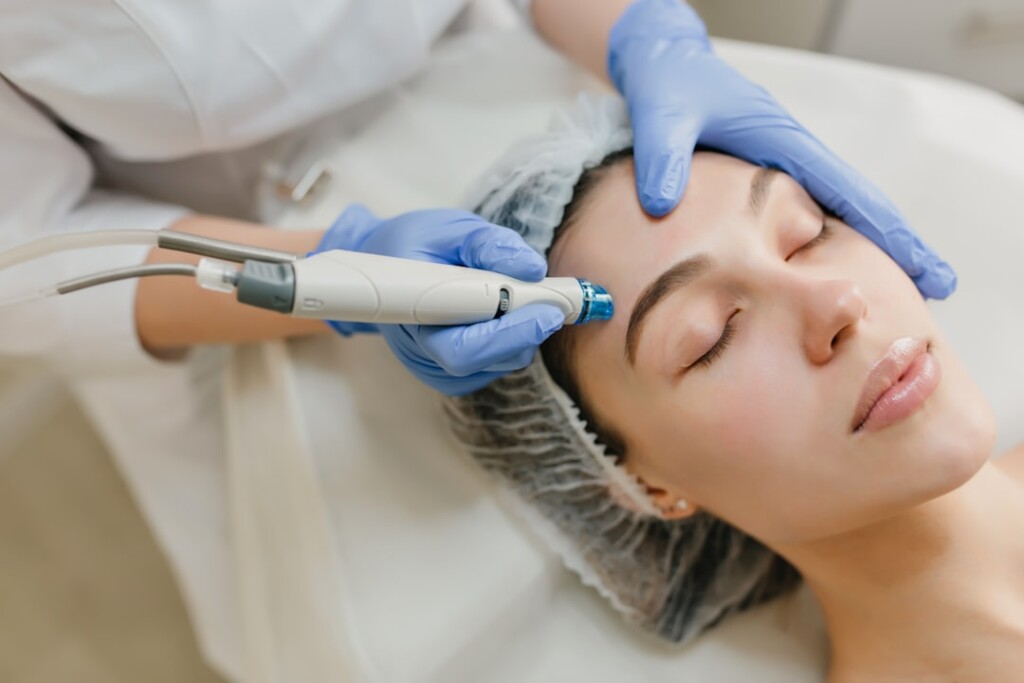
A preventative treatment plan is conservative by design. Smaller units, fewer areas, and longer intervals between treatments distinguish it from a corrective approach. The goal is not to freeze movement. It is to reduce the force of muscle contraction enough that the skin stops being deeply creased along the same line with each expression, while preserving your ability to frown, smile, and look like yourself.
At the consultation, Fahimeh assesses which muscles are active, how forcefully they contract, and how your skin responds to that folding. The dose is determined by your muscle strength and the depth of your dynamic lines, not by a standard protocol. A patient with strong corrugator muscles and early glabellar creasing may benefit from a conservative dose in that single area. Another patient may have mild forehead lines that do not yet warrant treatment. These two patients may be the same age. Their plans will look completely different.
The fear of looking done is one of the most common concerns patients raise, and it is a reasonable one. The overdone look comes from excessive dosing, poor placement, or treating areas that do not need treatment. A well-planned preventative approach is invisible to others. You will still be able to move your face. The crease will be shallower when you frown, the fold less deep when you concentrate, but your expression remains your own. Most people around you will notice that you look rested without being able to identify why.
For patients whose dynamic lines are concentrated in the glabellar region, our guide to frown lines Botox and conservative baby Botox dosing walks through how the corrugator muscles are assessed and why a lower-dose approach preserves natural expression while softening the crease.
Results develop gradually over 3 to 7 days, with the full effect typically visible by day 10 to 14. The change builds subtly, which is what most prevention-minded patients want. Maintenance is expected approximately every 3 to 4 months, though some patients find that as their muscle activity decreases over repeated treatments, they can extend the intervals between sessions. A measured maintenance plan keeps the result consistent and avoids the cycle of letting lines fully return before retreating, which can allow static creasing to deepen in the interim.
Frequently Asked Questions
Common questions about the best age to start preventative Botox, answered from a clinical perspective.
Thinking About Your Next Step
If you have noticed early dynamic lines and are wondering whether preventative Botox makes sense for your anatomy, the next step is a consultation, not a treatment. That consultation is a diagnostic conversation where Fahimeh assesses your muscle activity, skin quality, and the specific patterns that are beginning to form. You may leave with a conservative treatment plan. Or you may leave with the honest answer that your lines are not yet at a stage where treatment is justified, and that skincare and sun protection are the better next step. Either outcome is a valid clinical decision.
Book a consultation with Fahimeh at FAH Signature Clinique to explore whether preventative Botox is the right next step for your goals. The goal is always a refreshed version of your own face, not someone else’s, and that starts with an honest assessment of whether treatment is warranted at all.
Frequently Asked Questions
What is the best age to start preventative Botox?
There is no universal age. Most patients who benefit from preventative Botox are in their late 20s to early 40s and already have visible dynamic lines that are beginning to leave a faint trace at rest. The right timing depends on your muscle activity, skin quality, and anatomy, not your birthday. A consultation is the only way to determine whether treatment is clinically justified for you.
Can preventative Botox make me look frozen?
A well-planned preventative approach uses conservative doses designed to soften muscle contraction, not eliminate it. You should retain natural facial expression and be able to frown, squint, and smile. The frozen look typically comes from excessive dosing or poor placement, not from the treatment itself. Conservative dosing is specifically designed to avoid this outcome.
Is preventative Botox appropriate if I have no visible lines?
If you have no visible dynamic lines during expression, preventative Botox is generally not recommended. Treatment without a clinical sign to address introduces unnecessary intervention. A practitioner who is willing to tell you to wait is prioritizing your outcome over product volume. Skincare, sun protection, and regular monitoring may be more appropriate at that stage.
How is preventative Botox different from corrective Botox?
Preventative Botox targets dynamic lines that appear only during movement, before they become static lines visible at rest. It uses smaller doses and often treats fewer areas with longer intervals between sessions. Corrective Botox addresses static lines that are already etched and may require higher doses to soften. The goal and the dosing philosophy differ, even though the product is the same.
How long does preventative Botox last?
Preventative Botox typically lasts approximately 3 to 4 months, though conservative dosing may wear off slightly sooner. Maintenance is expected and is part of the process, not a sign that something went wrong. Many prevention-focused patients treat every 3 to 4 months initially, then extend intervals as muscle activity decreases over time.