
Skin care for oily skin fails most often not because people use the wrong ingredients, but because they use the right ones the wrong way. The instinct to strip away oil, skip moisturizer, and scrub hard is exactly what triggers the sebaceous gland to compensate by producing more sebum. The result is skin that feels tight and dry immediately after cleansing, then rebounds into an oilier, shinier, more congested state within hours. Effective oily skin care works the opposite way: it hydrates, it regulates, and it respects the barrier.
Why Oily Skin Is Often Misunderstood (And Overtreated)
Oily skin is not a hygiene problem. It is a sebaceous gland activity pattern, and those glands are governed by genetics, hormones, and the skin’s own moisture-sensing feedback loop. When you understand that biology, the counterintuitive truth about oily skin starts to make sense: removing oil aggressively makes the skin produce more of it.
The Biology of Sebum Overproduction
Sebaceous glands are concentrated most densely in the T-zone: forehead, nose, and chin. In oily skin, these glands are highly responsive to androgens (male hormones present in both sexes), and they produce more sebum than the follicle can efficiently clear. When that excess sebum mixes with dead skin cells that have not shed properly, a process called follicular hyperkeratinization, the pore becomes blocked. Cutibacterium acnes, the bacteria behind acne breakouts, thrives in this oxygen-deprived, lipid-rich environment, and the inflammatory cascade that follows produces the redness, swelling, and pain of active breakouts.
This means oily skin has three overlapping problems: too much sebum, poor cell turnover that lets dead cells accumulate in the follicle, and a bacterial environment that exploits both. A routine that only addresses one of these, like a harsh cleanser that removes surface oil, leaves the other two unchecked and often makes all three worse.
Why Stripping the Barrier Backfires
The skin barrier, specifically the stratum corneum, maintains a precise balance of lipids: roughly 50% ceramides, 25% cholesterol, and 15% free fatty acids. When you use a foaming cleanser with sodium lauryl sulfate (SLS), an alcohol-based toner, or a high-concentration acid daily, you dissolve that lipid matrix. The barrier becomes permeable, water evaporates through it faster than it can be replenished, and the skin detects dehydration.
Here is where the feedback loop kicks in. The sebaceous gland interprets dehydration as a signal that the skin lacks protective oil, and it ramps up production to compensate. You strip the skin, it produces more oil, you strip it again because it feels oily, and the cycle accelerates. This is why patients so often tell us their skin feels “addicted” to harsh products: it is not addiction, it is a biological compensation pattern that the wrong routine is actively feeding.
The other consequence of over-stripping is barrier inflammation. A compromised stratum corneum lets irritants penetrate more easily, triggering low-grade inflammation that manifests as redness, sensitivity, and reactive breakouts. Many patients who think they have “sensitive oily skin” actually have oily skin with a barrier damaged by their own routine. The sensitivity is self-inflicted, and it resolves when the stripping stops.
Building a Routine That Balances Sebum Without Stripping
A routine for oily skin should regulate sebum, normalize cell turnover, keep pores clear, and maintain hydration so the sebaceous gland does not trigger its compensatory oil surge. That requires four steps done consistently: a gentle gel cleanser, a sebum-regulating serum, a lightweight moisturizer, and daily sun protection. Most oily skin routines fail not because they are too simple, but because one of those four steps is missing or doing the wrong thing.
Step 1: Cleanse Gently, Twice Daily
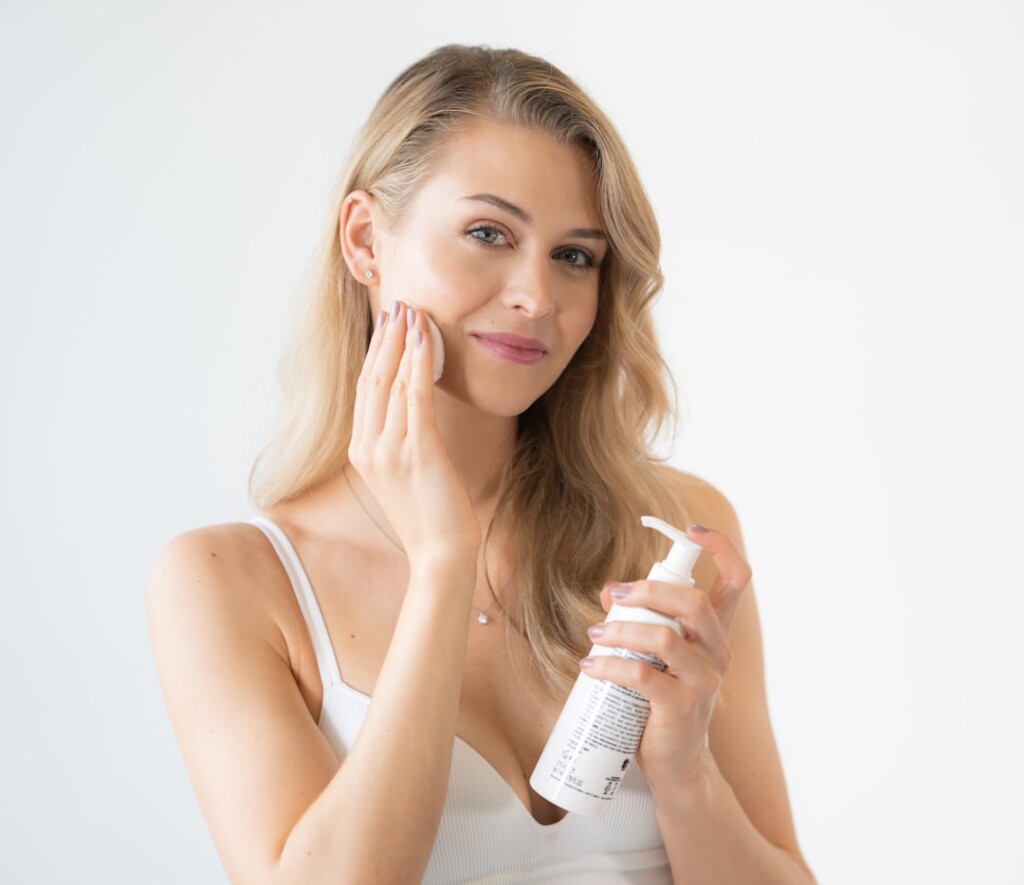
Use a gel cleanser with mild surfactants like cocamidopropyl betaine or sodium cocoyl isethionate. These remove excess sebum and debris without dissolving the lipid matrix the way SLS-based cleansers do. Cleanse morning and evening with lukewarm water, never hot. The goal is to remove surface oil, sweat, and the previous night’s products, not to leave the skin feeling squeaky. That tight, squeaky feeling is the sound of your barrier being damaged.
Step 2: Apply a Sebum-Regulating Serum
After cleansing, while the skin is still slightly damp, apply a niacinamide serum at 4 to 5% concentration. Niacinamide is the single most clinically validated ingredient for oily skin because it addresses the root cause: it downregulates the enzymes that synthesize lipids in the sebaceous gland, reducing oil output over weeks of consistent use. At the same time, it stimulates ceramide production, which strengthens the barrier and reduces the dehydration signal that triggers compensatory sebum. This dual action is exactly what oily skin needs: less oil production and a stronger barrier in one step.
Step 3: Exfoliate With Salicylic Acid, Not Scrubs
Two to three evenings per week, apply a 2% salicylic acid (BHA) exfoliant after cleansing. Salicylic acid is oil-soluble, which means it penetrates into the pore itself rather than sitting on the surface. It dissolves the sebum-and-dead-cell plug that causes blackheads and whiteheads, and it has anti-inflammatory properties that reduce the redness associated with active breakouts. Physical scrubs, by contrast, only remove surface dead cells and can cause micro-tears that inflame the barrier. Avoid them entirely.
Do not use salicylic acid every day unless your skin has been acclimated to it over months. Daily BHA can over-exfoliate and trigger the same compensatory oil surge that harsh cleansers cause. Twice weekly is the starting point; increase only if your skin tolerates it without tightness or flaking.
Step 4: Moisturize With a Lightweight Gel
This is the step oily skin patients skip most often, and it is the step that causes the most damage when skipped. Oily skin still needs moisture. When you skip moisturizer, the barrier detects dehydration and signals the sebaceous glands to produce more oil. A lightweight, non-comedogenic gel moisturizer with humectants like glycerin or hyaluronic acid hydrates without clogging pores and actually helps reduce oiliness over time by keeping the dehydration signal silent.
Look for a gel texture, not a cream. Gel moisturizers are water-based and absorb quickly without leaving an occlusive film. They are formulated specifically for oily and combination skin because they deliver hydration without adding oil to a skin that is already producing too much of it.
Step 5: Sunscreen Every Morning
UV exposure damages the barrier and triggers inflammation, both of which worsen oily skin over time. Use a broad-spectrum SPF 30 or higher every morning. For oily skin, a fluid or gel sunscreen formulated without heavy oils works best. Many modern sunscreens are designed specifically for oily and acne-prone skin and double as a lightweight morning moisturizer, which simplifies the routine.
Key Ingredients for Oily Skin: What the Evidence Says
Not every ingredient marketed to oily skin has the same level of evidence behind it. The table below breaks down the most relevant actives by their mechanism, the concentration that clinical research supports, and the specific oily skin concern each one addresses. Use it as a reference when reading product labels, not as a shopping list. The goal is to match the ingredient to what your skin is actually doing.
| Ingredient | Mechanism | Effective Concentration | Best For | Frequency |
|---|---|---|---|---|
| Niacinamide (B3) | Downregulates sebum synthesis enzymes; stimulates ceramide production | 4 to 5% | Daily sebum regulation, barrier strengthening | Morning and evening |
| Salicylic acid (BHA) | Oil-soluble; penetrates pore to dissolve sebum and dead-cell plugs | 1 to 2% | Blackheads, whiteheads, congestion | 2 to 3 times per week |
| Retinoids (retinol, retinaldehyde, tretinoin) | Normalizes cell turnover so dead cells do not accumulate in follicles; reduces sebum over time | 0.025 to 0.3% (start low) | Chronic congestion, breakouts, pore appearance | Evening, 2 to 3 times per week initially |
| Hyaluronic acid | Humectant; attracts and holds water in the stratum corneum without adding oil | 0.1 to 1% | Lightweight hydration for oily skin | Morning and evening on damp skin |
| Zinc PCA | Reduces sebum secretion; has mild antibacterial action against C. acnes | 1 to 2% | Oil control in serums or moisturizers | Daily |
| Glycolic acid (AHA) | Water-soluble; exfoliates surface dead cells, improves texture | 4 to 8% | Surface texture and tone (not for pore clearing) | 1 to 2 times per week |
How These Ingredients Work Together
Niacinamide and salicylic acid address the two core problems of oily skin simultaneously: niacinamide reduces sebum production at the gland level, while salicylic acid keeps the pore clear of what sebum is still being produced. A retinoid added at night normalizes cell turnover so dead cells do not accumulate and block the follicle in the first place. Hyaluronic acid or glycerin in a gel moisturizer maintains hydration so the barrier does not trigger compensatory oil. This is the evidence-based core of skin care for oily skin, and it requires only four or five products.
What to Avoid
- SLS and SLES cleansers: These strip the lipid barrier aggressively and trigger compensatory sebum production.
- Alcohol-based toners: They evaporate quickly, pulling moisture with them, and signal the gland to produce more oil.
- Heavy occlusive creams and oils: They trap sebum beneath a lipid layer the skin does not need, creating an environment where C. acnes thrives.
- Physical scrubs: They cause micro-tears, inflame the barrier, and only remove surface cells rather than clearing the pore.
- Over-exfoliation: Using BHA, AHA, and retinoids all at high frequency simultaneously will compromise the barrier and worsen oiliness.
When Topicals Aren’t Enough: In-Clinic Options for Oily Skin
A well-built home routine regulates sebum, keeps pores clear, and maintains the barrier. But topicals operate on the epidermis and the uppermost dermis. They cannot deliver active compounds deep enough to address chronic congestion that persists despite consistent product use, or to remodel enlarged pores that have become structurally stretched over time. When you have been consistent with your routine for three to six months and are still frustrated by congestion, dullness, or visible pore enlargement, in-clinic treatments can address the problem at a deeper level.
Mesotherapy: Nutrient Delivery to the Dermal Level
Mesotherapy uses a series of microinjections, typically with a 30 to 32 gauge needle at a depth of 1 to 2 millimetres, to deposit a customized blend of vitamins, amino acids, hyaluronic acid, and peptides directly into the superficial dermis. The stratum corneum is designed to keep things out, which is why even well-formulated topical serums have limited penetration. Mesotherapy bypasses that barrier entirely, delivering compounds to the layer where fibroblasts, blood vessels, and the extracellular matrix actually reside.
For oily skin specifically, mesotherapy can help when the dermis is nutrient-depleted and the skin looks dull, thickened, or congested despite a consistent routine. The deposited compounds support fibroblast activity, improve local circulation, and help the skin maintain healthier function from within. The micro-injection trauma itself also stimulates a localized healing cascade that increases local blood flow and supports tissue remodeling. A course of 3 to 5 sessions spaced 2 to 4 weeks apart is typical, with maintenance every 3 to 6 months. Learn more about how mesotherapy glow injections work to understand the full mechanism.
Microneedling: Collagen Induction for Enlarged Pores
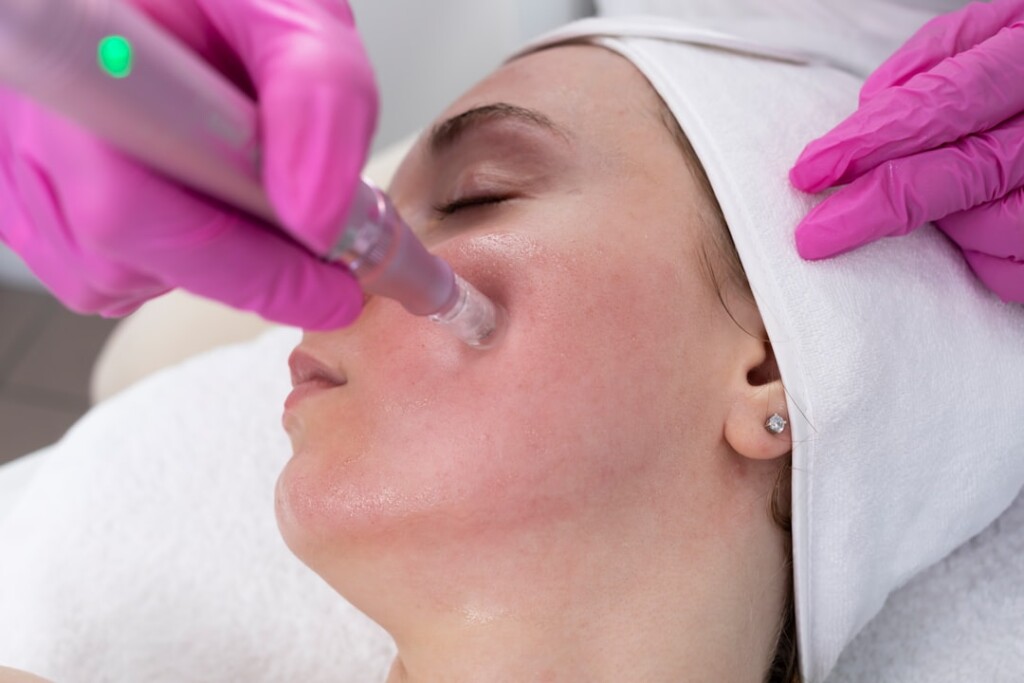
Microneedling creates thousands of controlled micro-injuries in the skin using a device with fine needles, triggering a wound-healing cascade that stimulates collagen and elastin production. For oily skin, the most relevant application is enlarged pores. Pores that have been chronically stretched by sebum overproduction and repeated congestion do not shrink with topicals, because the issue is structural, not superficial. Microneedling at depths of 0.5 to 1.0 millimetre reaches the papillary dermis and stimulates the collagen remodeling that can tighten the tissue around the pore over time.
Most protocols involve 3 to 6 sessions spaced 4 to 6 weeks apart, with results developing gradually over 4 to 8 weeks per session as collagen remodels. The skin typically appears red for 1 to 3 days after treatment, similar to a mild sunburn. Microneedling is particularly effective for acne scarring, enlarged pores, and generalized textural improvement, while mesotherapy is the more direct approach for hydration and nutrient delivery. For a detailed comparison of how these two treatments differ and when to combine them, see our guide on mesotherapy versus microneedling for skin.
Knowing Where Home Care Ends
The boundary between home skincare and in-clinic treatment is not about one being better than the other. It is about depth. Your daily routine maintains the barrier, regulates sebum, and protects against UV damage. In-clinic treatments work below the epidermis, where topicals cannot reach, to address structural concerns like enlarged pores, chronic congestion, and dermal nutrient depletion. The two work together, not in competition. For a broader framework on how to match your routine to your skin type and understand these clinical limits, explore our clinical guide to skin care routines by skin type.
Frequently Asked Questions About Oily Skin Care
The questions below address the most common concerns patients raise about oily skin during consultations. They reflect real patterns we see in clinic, not hypothetical scenarios.
Get a Routine Tailored to Your Skin
The most effective skin care for oily skin is not the most elaborate routine or the one with the most active ingredients. It is the one that respects the biology of your sebaceous glands, maintains your barrier, and uses ingredients with mechanisms that address what your skin is actually doing. When that routine is optimized and you are still dealing with congestion, enlarged pores, or dullness that topicals cannot resolve, in-clinic treatments like mesotherapy and microneedling can bridge the gap between what you can do at home and what your skin needs at depth.
If you are in the early stages of research or ready to discuss a treatment plan, we welcome the conversation. Book a consultation with Fahimeh at FAH Signature Clinique to determine whether your home routine needs adjustment, whether an in-clinic treatment is the right next step, or to leave with the honest answer that a different approach would serve you better. The consultation is a diagnostic conversation, not a commitment to treatment. Sometimes the most useful recommendation is to refine your routine and return in six months, and that restraint is part of safe practice.
Frequently Asked Questions
Why does my oily skin feel tight and dry after cleansing?
This usually means your cleanser is stripping the lipid barrier. Foaming cleansers containing sodium lauryl sulfate (SLS) dissolve the ceramides and fatty acids that hold moisture in the skin. When the barrier is compromised, water evaporates faster and the skin feels tight. The sebaceous gland then interprets this dehydration as a signal to produce more oil, which is why your skin rebounds into an oilier state within hours. Switch to a gentle gel cleanser with mild surfactants and the tightness should resolve within a week or two.
Should I skip moisturizer if I have oily skin?
No. Skipping moisturizer is one of the most common mistakes in oily skin care and often makes oiliness worse. When you do not moisturize, the barrier detects dehydration and signals the sebaceous glands to produce more oil to compensate. A lightweight, non-comedogenic gel moisturizer with humectants like glycerin or hyaluronic acid hydrates without clogging pores and helps reduce oil production over time by keeping the dehydration signal silent.
How long does it take for niacinamide to reduce oil production?
Niacinamide at 4 to 5% concentration typically takes 4 to 8 weeks of consistent daily use to produce a measurable reduction in sebum output. It works by downregulating the enzymes that synthesize lipids in the sebaceous gland, which is a gradual biological process, not an overnight one. Consistency matters more than concentration. Applying it morning and evening on clean, slightly damp skin gives the best results.
Can in-clinic treatments like mesotherapy help with oily skin?
Yes, when topicals have plateaued. Mesotherapy delivers vitamins, hyaluronic acid, amino acids, and peptides directly into the dermis via microinjections, bypassing the stratum corneum. This can address dullness, dermal nutrient depletion, and skin quality issues that surface products cannot reach. For enlarged pores specifically, microneedling may be more appropriate because it stimulates collagen remodeling that can tighten the tissue around the pore. A consultation helps determine which approach matches your specific concern.
Is it normal for oily skin to become sensitive over time?
It is common, but it is usually a sign of barrier damage from over-stripping rather than true sensitivity. Harsh cleansers, alcohol toners, daily acid exfoliation, and physical scrubs all compromise the stratum corneum, allowing irritants to penetrate and trigger inflammation. If your oily skin has become red, reactive, or stings with products that previously felt fine, simplify your routine to a gentle cleanser, niacinamide serum, gel moisturizer, and sunscreen. Give the barrier 2 to 4 weeks to recover before reintroducing actives.