
Restylane Skinbooster is an injectable skin-quality treatment that deposits microdroplets of stabilized hyaluronic acid directly into the dermis to restore deep hydration and stimulate collagen production from within. Unlike traditional dermal fillers, which add volume to reshape facial contours, Restylane Skinbooster works at the tissue level: it improves the quality, elasticity, and luminosity of the skin itself without altering your facial structure. For prevention-minded patients noticing early dullness, fine lines, or a loss of that youthful plumpness that no topical product seems to recapture, this is a treatment category worth understanding before deciding whether it belongs in your plan.
The distinction between skin quality and facial volume is where many patients get tripped up. Creams and serums sit on the surface. Fillers add structure beneath it. Restylane Skinbooster occupies a space between the two: it delivers hydration and biological signalling directly to the dermal layer where fibroblasts live, where collagen is produced, and where topical products cannot reach. The result is skin that looks more rested and more luminous because the tissue itself is functioning more like younger skin.
What Is Restylane Skinbooster?
Restylane Skinbooster is part of a treatment category known as skin boosters: injectable hyaluronic acid formulations designed not to fill lines or restore volume, but to improve the biological quality of the skin. The product uses Galderma’s patented NASHA technology (Non-Animal Stabilized Hyaluronic Acid), which involves a low degree of chemical cross-linking that preserves the natural entanglements of the HA molecule. This matters because it allows the gel to integrate into dermal tissue and persist for months rather than degrading within days the way native hyaluronic acid does. Your body’s own HA turns over in 24 to 48 hours. Stabilized HA resists that rapid breakdown, which is why the effects of a skin booster last far longer than a mesotherapy injection of non-crosslinked HA.
The treatment involves a series of microinjections placed into the deeper dermis, each delivering a precise microdroplet of approximately 10 microlitres. The product comes in two formulations: Restylane Skinboosters Vital, designed for thicker skin and more pronounced signs of aging, and Restylane Skinboosters Vital Light, formulated for thinner skin, younger patients, and areas like the neck and decolletage where a lighter touch is needed. Both use the SmartClick syringe system, which provides an audible click with each dose to ensure consistent, reproducible microdroplet delivery. That precision is not a marketing detail; it is a clinical safeguard that helps prevent uneven distribution and superficial placement.
Treatment areas include the face (particularly the mid- and lower face), the neck, the decolletage, and the dorsal hands, all zones where skin thinning and dehydration become visible earliest and where topical products struggle to make a meaningful difference.
How Skinbooster Differs from Traditional Dermal Fillers
The confusion between skin boosters and dermal fillers is understandable because both are injectable hyaluronic acid products made by the same manufacturer. But they are designed for fundamentally different purposes, use different rheological properties, and produce different outcomes. A traditional dermal filler is formulated with a higher degree of cross-linking to create a cohesive gel that occupies space and provides structural support. It is placed to restore volume in a defined area: the cheeks, the tear troughs, the lips, the jawline. The result is visible immediately and is about shape, not texture.
A skin booster, by contrast, is designed to flow and integrate rather than to hold a shape. The HA is less cross-linked, the particles are smaller, and the injection technique deposits many tiny droplets across a broad area rather than a focused deposit in one location. There is no immediate volumizing effect. Instead, the HA binds water within the dermis over the following days, creating a deep hydration effect, while simultaneously stimulating fibroblast activity that triggers new collagen production over weeks. For patients trying to understand where this fits relative to other injectable options, our article on collagen-stimulating treatments like Sculptra explains how biostimulators work through a different but related mechanism.
| Parameter | Restylane Skinbooster | Traditional Dermal Filler |
|---|---|---|
| Primary goal | Improve skin quality, hydration, elasticity | Restore volume, contour, or define a specific area |
| HA formulation | Low cross-linking (SB-NASHA), small particles, flows freely | Higher cross-linking, cohesive gel, holds shape |
| Injection technique | Multiple microdroplets (~10 μL each) across broad area | Targeted deposits or linear threads in specific zones |
| Depth | Deep dermis / subdermis | Subcutaneous or deep dermis, area-dependent |
| Immediate visible result | No volume change; hydration glow develops over days | Visible volume and contour change immediately |
| Cumulative effect | Collagen stimulation builds over weeks across sessions | Volume is present from day one; no biological stimulation |
| Reversibility | Yes, with hyaluronidase | Yes, with hyaluronidase |
| Typical duration | 9 to 15 months after initial course (per manufacturer data) | 6 to 18 months depending on product and area |
| Best suited for | Dull, dehydrated skin; early fine lines; texture concerns | Volume loss; hollows; defined contouring needs |
The key takeaway: if your concern is that your skin looks tired, flat, or dry despite a good skincare routine, a skin booster addresses the tissue quality. If your concern is that your cheeks have flattened or your under-eye area looks hollow, that is a volumetric concern best addressed with a traditional dermal filler. Many treatment plans use both, but they are not interchangeable.
The Science: Deep Hydration and Collagen Stimulation
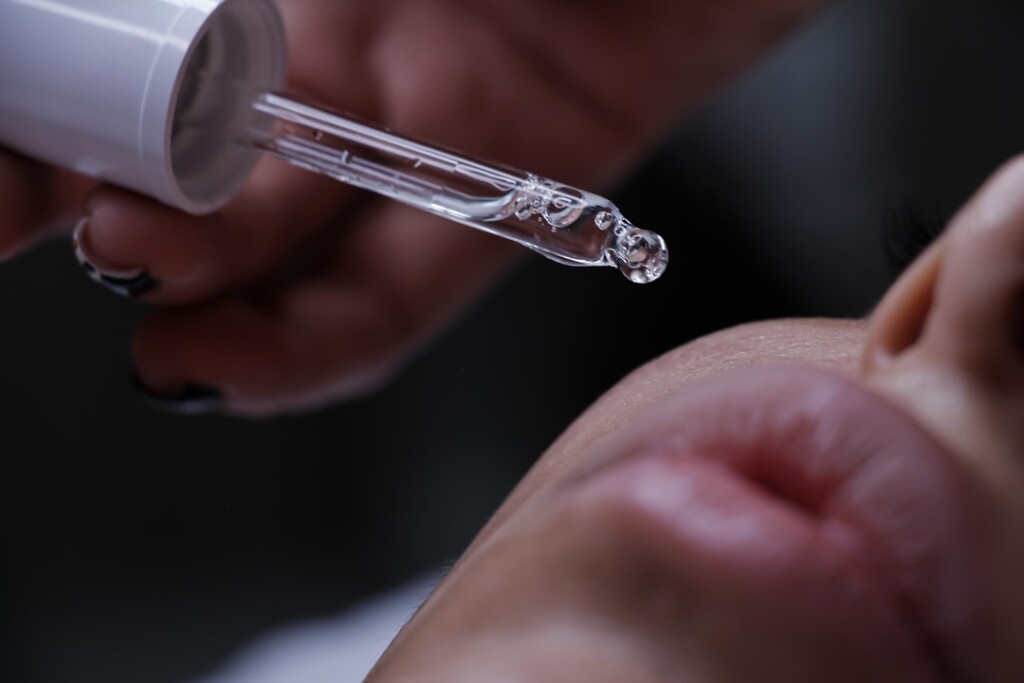
Restylane Skinbooster works through two simultaneous mechanisms: direct dermal hydration from the stabilized hyaluronic acid itself, and biological stimulation of collagen production through mechanical signalling to fibroblasts. Understanding both is essential because it explains why the results develop gradually and why the treatment requires a series of sessions rather than a single appointment.
Why Stabilized HA Outlasts Native HA
Natural hyaluronic acid in your body forms long molecular chains that are constantly forming and degrading, typically within 24 to 48 hours. This rapid turnover is why topical HA products provide only transient surface moisture: they cannot reach the dermis, and even if they could, the molecule would be broken down almost immediately. Restylane Skinbooster uses a patented stabilization process that creates a low degree of chemical cross-linking using BDDE (1,4-butanediol diglycidyl ether) as the crosslinker. This binds individual HA molecules into a polymer network that resists enzymatic degradation while still preserving the natural entanglements of the molecule. The result is a gel that behaves like your skin’s own HA but persists in tissue for months, continuously binding water and interacting with dermal cells.
Fibroblast Stretching and Collagen Activation
The collagen-stimulating effect of Restylane Skinbooster is not a marketing claim; it has been documented in histological and immunohistochemical studies. When stabilized HA microdroplets are deposited into the reticular dermis, they create a physical presence that mechanically stretches the surrounding fibroblasts. Fibroblasts are sensitive to mechanical tension: when stretched, they respond by upregulating the production of type I collagen and procollagen. This is the same mechanism by which biostimulatory products like Sculptra trigger neocollagenesis, though through a different trigger. With skin boosters, it is the HA gel itself that provides the mechanical signal.
Research published in the Journal of Drugs in Dermatology by an expert panel confirmed that procollagen synthesis remains up-regulated for weeks after treatment, making stabilized HA an ongoing trigger factor for collagen production rather than a one-time stimulus. This is why the manufacturer recommends regular retreatment: it maintains the tissue activation and continued stimulation of the dermal matrix. For patients who want to understand how this collagen stimulation compares to the more powerful volumetric rebuilding achieved by biostimulators, the distinction is one of degree. Skin boosters provide early, gradual collagen support that improves skin texture. Biostimulators provide more significant structural collagen rebuilding for visible volume loss. The two are complementary.
The Dual Mechanism in Practice
Patients often notice an immediate glow within the first week after treatment. That early effect comes from the HA itself: the microdroplets bind water in the dermis, and the skin looks more hydrated and luminous because it actually is, at the tissue level. This is similar to what patients experience with mesotherapy glow injections, though the stabilized HA in a skin booster persists far longer than the non-crosslinked HA used in mesotherapy.
The deeper improvements develop over weeks and months as fibroblasts respond to the mechanical stimulus. Fine lines may soften, not because volume has been added, but because the underlying tissue is better hydrated and better supported. Skin elasticity improves as new collagen integrates into the dermal matrix. These changes are cumulative across sessions and are what give skin boosters their lasting effect beyond the lifespan of the HA gel itself.
Who Is a Good Candidate?

The ideal candidate for Restylane Skinbooster is someone whose primary concern is skin quality rather than structural volume loss. These are often prevention-minded patients in their early 30s who have noticed that their skin looks duller, drier, or less luminous than it did a few years ago, and who understand that no topical product can fully address changes happening in the dermis. They may have a solid skincare routine and want to complement it with something that works at a deeper biological level.
Restorative seekers in their 40s, 50s, and beyond can also benefit, particularly for areas where the skin has thinned noticeably: the neck, decolletage, and hands. In these zones, the skin is thinner and more prone to crepiness and visible dehydration, and a skin booster can improve texture and elasticity in a way that volumetric fillers cannot.
Specific patterns that suggest a skin booster may be appropriate include persistent deep dehydration that does not respond to topical products, early fine lines that are more related to skin thinning than to muscle movement, a general loss of radiance and smoothness, and acne scarring where improving skin texture is the priority. Galderma’s clinical data reports improvement in six skin quality dimensions: hydration, smoothness, firmness, elasticity, even tone, and reduced scarring.
Who Is Not a Good Candidate
A skin booster will not replace lost facial fat, re-drape lax skin, or address deep structural hollows. If your primary concern is that your cheeks have flattened or your temples look hollow, the issue is volumetric, not textural, and a skin booster alone will not produce the result you are looking for. Similarly, if dynamic wrinkles caused by muscle movement are your main concern, a neuromodulator like Botox or Dysport is the appropriate tool, not a skin booster.
Patients with active skin infections, certain autoimmune conditions, pregnancy, or those on specific anticoagulant medications may not be suitable candidates. A thorough consultation and health history review is required before any treatment plan is established. Fahimeh screens patients out as readily as she screens them in, because recommending a treatment that does not match your anatomy or your goals is not good practice, it is just sales.
What to Expect: Sessions, Results, and Maintenance
The Initial Treatment Course
According to Galderma’s official Instructions for Use, the recommended initial treatment protocol consists of three sessions spaced approximately four weeks apart for Restylane Skinboosters Vital, and three sessions spaced two to four weeks apart for Vital Light. Each session takes roughly 15 to 45 minutes depending on the size of the treatment area. A topical numbing cream is applied before treatment, and both formulations include lidocaine for additional comfort. The microinjections use a 29-gauge thin-walled needle, and the SmartClick syringe delivers a consistent approximately 10-microlitre dose per click.
After each session, patients may experience mild redness, swelling, tenderness, itching, or minor bruising at the injection sites. These reactions are expected and typically resolve within two to seven days without treatment. Most patients return to normal activities the following day.
The Results Timeline
| Timepoint | What Is Happening in the Dermal Tissue | What You See |
|---|---|---|
| Days 1 to 7 | HA microdroplets binding water; mild inflammatory response | Initial glow and subtle plumping; mild redness or swelling resolving |
| Weeks 2 to 4 | Fibroblast activation begins; procollagen synthesis up-regulated | Improved hydration and radiance; fine lines beginning to soften |
| Weeks 4 to 8 | Second session builds on first; collagen production active | Cumulative improvement in texture, smoothness, and elasticity |
| Months 2 to 4 | Third session completes initial course; collagen network maturing | Noticeable but natural improvement; skin looks rested, not filled |
| Months 4 to 6 | Collagen remodeling continues; HA gel integrating into dermal matrix | Sustained skin quality improvement; maintenance session typically planned |
| Months 6 to 15 | Collagen scaffold stable with maintenance; HA gradually metabolized | Results maintained with periodic retreatment |
The published expert panel consensus in the Journal of Drugs in Dermatology noted that skin benefits are visible within 15 days of the first session, with progressive improvement in skin structure over the first six months maintained for 9 to 12 months after a course of two to three sessions. Galderma’s clinical data reports results lasting up to 15 months, with 100% of treated patients still showing skin quality improvement at 12 months post-treatment. These are manufacturer-reported figures, and individual results vary based on skin condition, age, lifestyle, and adherence to the maintenance schedule.
Maintenance Protocol
After the initial three-session course, maintenance treatments are recommended every 4 to 6 months for Vital Light and every 6 months for Vital, though this is adjusted based on how your skin responds and what your goals are. Regular retreatment matters because it maintains the ongoing tissue activation: the collagen-stimulating effect of stabilized HA is not permanent, and without maintenance, the dermal environment gradually returns to its pre-treatment state.
For a broader understanding of how different injectable products compare in longevity, our guide on how long fillers last by product and area breaks down expected timelines across the full range of HA fillers and biostimulators.
How Skinbooster Fits Into a Broader Treatment Plan
In practice, Restylane Skinbooster is rarely the only treatment in a plan. It complements volumetric fillers by improving the quality of the skin overlying structural treatments. It can be combined with neuromodulators to address both skin texture and dynamic lines. For patients seeking more significant collagen rebuilding for visible volume loss, a biostimulator like Sculptra addresses the structural layer while a skin booster refines the surface quality. The two are not redundant; they work at different depths and through different mechanisms.
This is where a zone-by-zone facial assessment matters. A concern that seems to live in one area may actually start somewhere else. For example, dull, thin skin across the midface may benefit from a skin booster, while a hollow under the eye may require a small amount of HA filler. The right plan depends on what your anatomy actually needs, not on a generic template.
Exploring Whether Restylane Skinbooster Fits Your Goals
Deciding whether Restylane Skinbooster is the right next step requires a conversation, not a catalog. The treatment is designed for patients whose concern is skin quality, not structural volume, and the honest recommendation during a consultation may be that a different approach, or a combination, would serve you better. That restraint is part of safe practice. It is also one of the clearest signs that your injector is prioritizing outcome over volume sold.
Book a consultation with Fahimeh at FAH Signature Clinique on Nun’s Island to explore whether Restylane Skinbooster is the right next step for your goals. Your first visit should feel more like a diagnostic conversation than a sales appointment. You may leave with a treatment plan, or with the honest answer that a different approach would serve you better. Either outcome is a valid clinical decision, and either one is a step toward skin that looks like you, only more rested and more luminous.
Frequently Asked Questions
Common questions about Restylane Skinbooster, answered based on the product’s clinical evidence and Galderma’s official treatment protocols.
Frequently Asked Questions
Does Restylane Skinbooster add volume to the face?
No. Restylane Skinbooster is designed to improve skin quality, hydration, and elasticity, not to add volume or reshape facial contours. If your concern is volume loss or hollows, a traditional dermal filler is the appropriate tool. A skin booster can complement fillers by improving the quality of the skin overlying them.
How many Restylane Skinbooster sessions are needed?
The manufacturer-recommended initial protocol is three sessions spaced approximately four weeks apart for Vital and two to four weeks apart for Vital Light. After the initial course, maintenance sessions are recommended every 4 to 6 months depending on the formulation and how your skin responds.
How long do Restylane Skinbooster results last?
Published clinical data reports skin quality improvement maintained for 9 to 12 months after an initial course of two to three sessions, with Galderma reporting results lasting up to 15 months. Individual results vary based on skin condition, age, lifestyle, and adherence to the maintenance schedule.
Is Restylane Skinbooster painful?
Both formulations include lidocaine for comfort, and a topical numbing cream is applied before treatment. Most patients describe the sensation as mild pinching rather than significant pain. The microinjections use a fine 29-gauge needle and are generally well tolerated across the face, neck, decolletage, and hands.
Can Restylane Skinbooster be combined with other treatments?
Yes. Skin boosters complement volumetric fillers, neuromodulators, and biostimulators like Sculptra. Each addresses a different layer of concern: skin boosters improve tissue quality, fillers restore volume, and biostimulators rebuild structural collagen. A consultation determines which combination suits your anatomy and goals.