

Many patients in their late 40s, 50s, and beyond notice that their face looks more deflated than it used to, not just lined or wrinkled. The cheeks sit lower, the temples look hollow, and the overall impression is one of tiredness that no amount of sleep seems to fix. This is the moment many restorative seekers first encounter the category of collagen-stimulating treatments, also called biostimulators, and realize there is an approach designed not to fill a line but to rebuild the tissue beneath it.
Unlike traditional hyaluronic acid fillers, which add immediate volume that the body gradually metabolizes, biostimulators work by triggering your own fibroblasts to produce new collagen over weeks and months. The result develops gradually, looks like your own tissue because it is, and tends to last considerably longer than a standard filler. For patients who want meaningful restoration without an artificial appearance, this category deserves serious understanding before any decision is made. If you are already researching how different injectables are assessed together, our guide on dermal fillers and neurotoxins explains how the full range of options is evaluated.
What Are Collagen-Stimulating Treatments (Biostimulators)?
Collagen-stimulating treatments, or biostimulators, are injectable products that do not simply occupy space beneath the skin. Instead, they initiate a biological process called neocollagenesis, where your own fibroblasts, the connective tissue cells responsible for producing collagen, are activated to build new collagen scaffolding around the injected material. The product acts as a catalyst rather than a filler in the traditional sense.
This distinction matters more than it might sound. A hyaluronic acid filler provides volume the moment it is injected. The improvement is immediate, and it is also temporary because the body eventually metabolizes the gel. A biostimulator provides almost no visible volume on day one. Instead, it sets in motion a cascade of tissue remodeling that becomes visible gradually over 6 to 12 weeks and continues to develop across multiple sessions. The tradeoff is patience for longevity: because the improvement comes from your own collagen rather than a foreign gel, the result can persist 18 to 24 months or longer.
For restorative seekers, this biological mechanism aligns with a goal that many describe in consultation: looking like a more rested, more supported version of themselves rather than someone who has obviously had work done. The gradual timeline means there is no dramatic day-of transformation that announces itself to colleagues or friends. People may notice you look better without being able to identify why.
The Biology in Plain Terms
When a biostimulator is injected, the microparticles it contains create a controlled stimulus in the dermis and subcutaneous tissue. Your body responds to this stimulus the way it responds to any structural signal: by sending fibroblasts to the area, where they begin depositing fresh collagen fibers around the particles. This process is called fibroplasia, and it is the same wound-healing response your body uses to repair tissue after injury, though here it is harnessed deliberately and gently.
Over several weeks, the new collagen forms a network that adds structural support to the treated area. The injected particles themselves gradually biodegrade, but the collagen they triggered remains. That is the core difference between a biostimulator and a traditional filler: the product disappears, but the tissue it helped build does not, at least not for a considerable time.
How Sculptra Works: PLLA and the Neocollagenesis Process
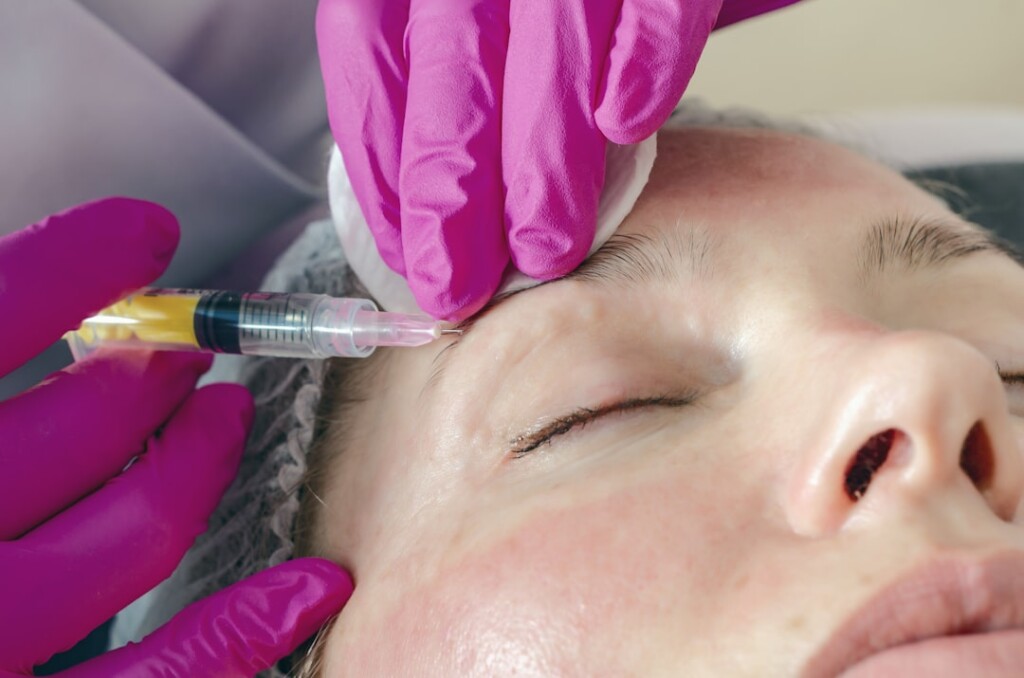
Sculptra is the most widely recognized collagen-stimulating treatment in aesthetic practice. Its active ingredient is poly-L-lactic acid (PLLA), a synthetic, biodegradable polymer that has been used in medicine for decades in dissolvable sutures and other implantable devices. PLLA is biocompatible, non-immunogenic, and does not require allergy testing before use.
When Sculptra is reconstituted and injected, the PLLA microparticles are distributed into the deep dermis and subcutaneous layer. Almost immediately, the water used to reconstitute the product provides a mild volumizing effect, but this fades within days. The real work begins as the body recognizes the PLLA particles and initiates fibroplasia around them. Fibroblasts migrate to the injection sites, lay down new collagen, and gradually replace the temporary water-based volume with living, structural tissue.
Dilution, Placement, and Why Technique Matters
Sculptra requires proper reconstitution with sterile water, typically hours to a full day before the appointment, to ensure the particles are fully hydrated and evenly suspended. The dilution ratio and injection technique directly influence how the product behaves in tissue. Poorly reconstituted product or superficial placement can lead to small, palpable nodules under the skin, which is why injector expertise with this specific product is non-negotiable.
Fahimeh is deliberately selective with Sculptra. The product is placed in deeper tissue planes, not superficially, and the volume per session is conservative. After treatment, patients follow a massage protocol, typically five minutes of gentle circular massage, five times daily, for five days. This helps distribute the particles evenly and reduces the risk of clumping. These details may sound granular, but they are the difference between a smooth, natural result and one that looks or feels irregular.
The Gradual Timeline: Why Patience Is Part of the Protocol
Sculptra does not produce a visible result on the day of treatment. The initial swelling from the injected water subsides within a few days, and for a brief period you may feel like nothing has changed. This is expected. The collagen-building process takes weeks, and most patients begin to notice subtle thickening and improved support around the 6-week mark. The full effect of a single session may not be apparent until 10 to 12 weeks.
This is why Sculptra is almost always planned as a series. A single session builds the first layer of collagen. A second session, typically 4 to 6 weeks later, builds on that foundation. A third session, if needed, refines and completes the restoration. For a deeper look at how biostimulator timelines compare to other products, our article on how long fillers last breaks down longevity by product type and treatment area.
Beyond Sculptra: The Full Biostimulator Category Compared
Sculptra is the most discussed biostimulator, but it is not the only one. Two other products in this category, Radiesse and Ellanse, work through related but distinct mechanisms. Understanding the differences helps clarify why your injector may recommend one over another based on your anatomy, the area being treated, and your goals.
Radiesse: Calcium Hydroxylapatite (CaHA)
Radiesse contains calcium hydroxylapatite microspheres suspended in a gel carrier. The gel provides immediate volume on injection, while the CaHA microspheres act as a scaffold that stimulates collagen production over the following weeks. This dual mechanism means Radiesse offers some of the immediate gratification of a traditional filler alongside the longer-lasting benefit of a biostimulator.
Radiesse is firmer than most hyaluronic acid products, which makes it well suited for structural areas like the jawline, chin, and deeper cheek support. It is not used in the lips or tear troughs, where softness and reversibility are priorities. Clinical reports typically place Radiesse longevity in the range of 12 to 18 months. Our guide to non-surgical jawline contouring explores how this type of structural product fits into lower-face treatment planning.
Ellanse: Polycaprolactone (PCL)
Ellanse uses polycaprolactone, another biocompatible, biodegradable polymer, suspended in a carrier gel. Like Radiesse, it provides immediate volume from the gel and longer-term collagen stimulation from the PCL microspheres. Ellanse is available in different formulations with varying particle sizes, which influences the duration of effect, with some versions designed to last up to 3 years or more.
Ellanse is used for facial volumizing and contouring in areas similar to Radiesse, though its availability varies by region and regulatory approval. The same principles apply: deep placement, conservative volume, and injector familiarity with the product are essential because, like all biostimulators, it cannot be dissolved with hyaluronidase.
Side-by-Side Comparison
| Product | Active Ingredient | Mechanism | Immediate Volume? | Typical Longevity | Best Suited For | Reversible? |
|---|---|---|---|---|---|---|
| Sculptra | Poly-L-lactic acid (PLLA) | Pure collagen stimulation via fibroplasia | No (brief water-based swelling only) | 18 to 24 months or longer | Diffuse volume loss: cheeks, temples, global facial restoration | No |
| Radiesse | Calcium hydroxylapatite (CaHA) | Immediate gel volume plus collagen stimulation | Yes, from gel carrier | 12 to 18 months | Structural areas: jawline, chin, deep cheek, hands | No |
| Ellanse | Polycaprolactone (PCL) | Immediate gel volume plus collagen stimulation | Yes, from gel carrier | 12 to 36+ months (varies by formulation) | Facial volumizing and contouring in structural zones | No |
| HA Fillers (reference) | Cross-linked hyaluronic acid | Direct volume replacement and water binding | Yes | 6 to 18 months (varies by area) | Lips, tear troughs, fine lines, precise contouring, any area needing reversibility | Yes, with hyaluronidase |
Biostimulators vs. Traditional Dermal Fillers: Which Is Right for You?
The choice between a biostimulator and a traditional hyaluronic acid filler is not a matter of one being better. They solve different problems, work on different timelines, and suit different anatomical situations. The right question is not “which product?” but “what is causing what I see, and which tool addresses that cause?”
When a Biostimulator Makes More Sense
Biostimulators are particularly valuable when the concern is diffuse volume loss rather than a single, sharply defined line or hollow. A patient who feels that their entire midface has flattened over several years, that their temples have hollowed, or that their face generally looks deflated and less supported is often an excellent candidate. The broad, gradual collagen rebuilding of a product like Sculptra addresses that pattern more naturally than chasing individual folds with gel filler.
Biostimulators also appeal to patients who want longer-lasting results and are willing to commit to a multi-session protocol with a gradual timeline. The tradeoff of patience for longevity is one that many restorative seekers find worthwhile, especially those who have had HA fillers before and found the maintenance schedule wearing.
When a Traditional HA Filler Is the Better Choice
Hyaluronic acid fillers remain the better choice for several specific situations. Precise contouring of a defined area, such as the lips, the tear trough, or a specific fold, calls for a product that can be placed with accuracy and adjusted if the result is not right. The reversibility of HA fillers with hyaluronidase provides a safety net that biostimulators cannot offer, which is why HA remains the default for first-time patients and for anatomically sensitive areas.
HA fillers are also better suited for patients who want immediate, visible results and are not prepared for the weeks-long development phase of a biostimulator. If you have an event in three weeks and want to look refreshed, a biostimulator is the wrong tool. For patients exploring how HA fillers are used to restore midface support specifically, our article on cheek fillers and facial balance explains how structural HA placement can influence the entire face.
Why Many Treatment Plans Use Both
In practice, the most sophisticated treatment plans often combine biostimulators and HA fillers, used in different areas and at different times. A patient might complete a series of Sculptra sessions to rebuild global facial volume over several months, then use a small amount of HA filler to refine a specific fold or enhance lip definition. The two categories are complementary, not competitive, and Fahimeh frequently builds staged plans that draw on both depending on what the anatomy needs.
What to Expect: Sessions, Timeline, and Gradual Results

A Sculptra protocol is not a single appointment. It is a series, typically 2 to 3 sessions, spaced 4 to 6 weeks apart, with the full result becoming apparent over several months. Understanding this timeline before you begin is essential because the gradual nature of the process is what produces the natural result, but it also requires a different kind of commitment than a one-and-done filler appointment.
Session One: Building the Foundation
Your first session begins with a review of the treatment plan, confirmation of the areas to be addressed, and photography for reference. The skin is cleansed, injection points are mapped to your anatomy, and the product is placed in deeper tissue planes using a fine needle or cannula. You may feel pressure, a pinch, or brief tenderness. Most patients describe the experience as manageable, particularly when the pace is calm and conservative.
Immediately afterward, the treated area may look slightly fuller from the water-based swelling, but this subsides within a few days. For the first week, you will be asked to massage the area gently and follow specific aftercare instructions. This is not the time to judge the result. The collagen-building process is just beginning.
Sessions Two and Three: Layering Collagen
At your follow-up appointment, typically 4 to 6 weeks later, Fahimeh assesses how your tissue has responded. Has collagen begun to build? Where is more support needed? The second session is planned based on what the first session achieved, not on a generic template. Some patients see meaningful change after one session and need only a light second treatment. Others require the full series to reach the level of restoration that feels right.
A third session, if recommended, follows the same logic. Each session builds on the collagen scaffold created by the previous one. This layering is what gives Sculptra its characteristic result: a gradual thickening and tightening of tissue that looks like your own face with better support, not like an addition bolted on from outside.
The Full Timeline at a Glance
| Timepoint | What Is Happening | What You See |
|---|---|---|
| Day 0 | PLLA injected; water-based swelling present | Slight fullness that fades in days |
| Week 1 | Fibroplasia begins; massage protocol underway | Little to no visible change |
| Weeks 4 to 6 | Collagen production active; second session if planned | Subtle thickening and improved support emerging |
| Weeks 8 to 12 | Collagen network maturing from first session | Noticeable but natural restoration becoming visible |
| Months 3 to 6 | Full series complete; collagen remodeling continues | Gradual, supported, rested appearance |
| Months 6 to 24+ | Collagen scaffold stable; PLLA fully biodegraded | Lasting improvement maintained by your own tissue |
Ideal Candidates: Who Benefits Most from Sculptra-Type Treatments?
The best candidates for Sculptra and other biostimulators are patients whose primary concern is diffuse, gradual volume loss rather than a single isolated line or hollow. These are often restorative seekers in their mid-40s to 60s who have noticed that their face looks deflated, less supported, or more tired than they feel, and who want to rebuild structure over time rather than fill a specific crease.
Common patterns that suggest a biostimulator may be appropriate include flattening across the cheeks and midface, hollowing in the temples, thinning of the skin with reduced elasticity, and a general sense that the face has lost its underlying scaffolding. Patients who have had HA fillers before and found that repeated maintenance felt burdensome often appreciate the longer timeline that a collagen-stimulating approach offers.
Who May Not Be a Good Candidate
Not every face is best served by a biostimulator. Patients with a single, well-defined concern, such as a deep tear trough hollow or thin lips, are usually better served by an HA filler that can be placed precisely and reversed if needed. Sculptra is not appropriate for lip enhancement, tear trough correction, or fine-line treatment in delicate, thin-skinned areas.
Patients with significant skin laxity, where the primary issue is loose skin rather than volume loss, may not see meaningful improvement from a biostimulator alone. In those cases, the honest recommendation may be that a different modality, or no injectable treatment at all, would serve the patient better. Fahimeh is deliberately selective because adding a collagen-stimulating product to a face that does not need volume will not produce a better result. It will simply produce an unnecessary one. The goal is harmony, structure, and facial movement that still feels unmistakably your own.
Combining Biostimulators with Other Treatments
For patients whose concerns span multiple areas, a biostimulator can form the structural foundation of a broader plan. Sculptra may be used to rebuild global facial volume, while a hyaluronic acid filler refines a specific fold or the under-eye area. Neurotoxins can address dynamic lines caused by muscle movement that no volume replacement would fix. For patients interested in complementary collagen-stimulating approaches, our article on PRP for skin rejuvenation explains how platelet-rich plasma therapy works alongside injectables to support tissue quality.
Exploring Whether a Biostimulator Protocol Fits Your Goals
Choosing a collagen-stimulating treatment is a decision that benefits from conversation before commitment. The gradual timeline, the multi-session structure, and the irreversible nature of biostimulators all mean that understanding the process before you begin is part of getting a result you will be happy with. A consultation should feel more like a diagnostic conversation than a sales appointment, where the goal is to understand your anatomy, your concerns, and whether this approach is the right fit or whether a different strategy would serve you better.
If you are in the early stages of research or ready to discuss a treatment plan, we welcome the conversation. Book a consultation with Fahimeh at FAH Signature Clinique to determine whether Sculptra or another biostimulator is the right next step for your goals, or to leave with the honest answer that a different approach would serve you better. Either outcome is a valid clinical decision, and either one is a step toward a face that looks like you, only more rested and more supported.
Frequently Asked Questions
How long do Sculptra results last compared to regular fillers?
Sculptra builds your own collagen rather than depositing a temporary gel, so results commonly last 18 to 24 months and sometimes longer with proper session planning. Hyaluronic acid fillers typically last 6 to 18 months depending on the area and product.
How many Sculptra sessions will I need?
Most patients need 2 to 3 sessions spaced 4 to 6 weeks apart, though the exact number depends on the degree of volume loss and how your tissue responds. The first session builds the foundation and subsequent sessions refine it.
Can biostimulators be dissolved if I don’t like the results?
No. Unlike hyaluronic acid fillers, biostimulators cannot be dissolved with hyaluronidase. This is why injector expertise, conservative placement, and a thorough consultation are especially important with these products.
Will Sculptra make me look overdone or puffy?
When placed conservatively by an experienced injector, Sculptra produces gradual improvement that looks like natural tissue restoration rather than added filler. The risk of an overdone appearance increases with aggressive volume or poor dilution technique, which is why practitioner selection matters.
Are biostimulators better than hyaluronic acid fillers?
Neither category is universally better. Biostimulators suit diffuse volume loss and patients wanting longer-lasting structural improvement. HA fillers are better for precise contouring, delicate areas like the lips and tear troughs, and patients who want reversibility. Many treatment plans use both.