
When you type “fillers near me” into a search bar, you are telling the algorithm something specific: you are past browsing and into evaluation. You know roughly what fillers are, you have a concern you want addressed, and you need a clinic you can trust to do it without making you look like someone else. That search is about proximity, yes, but it is also a quiet plea for competence. The closest clinic to your home or office is not always the right one, and understanding why can save you from results that are expensive to fix and uncomfortable to carry.
What “Fillers Near Me” Really Means in Montreal
Patients who search for fillers near me are not asking Google for a definition. They are asking for a shortlist of clinics they can physically get to, with the implicit hope that at least one of them will be good. The search is practical: you want to know who is within reach. But the evaluation that follows the search is clinical, and that is where most patients slow down, because the stakes feel personal in a way that other healthcare decisions often do not. You are not just choosing a provider. You are choosing who will alter the face you see in the mirror every morning.
Proximity matters for practical reasons. Filler treatments require an initial consultation, the treatment itself, and often a follow-up visit to assess results after the product has settled. If the clinic is a 90-minute drive each way, the friction adds up, and you may find yourself skipping follow-ups or delaying touch-ups that would improve your outcome. A clinic that is accessible from Montreal, Laval, or the South Shore reduces that friction without compromising on quality.
FAH Signature Clinique sits on Nun’s Island, or Île-des-Sœurs, a location that is quietly practical for patients coming from across Montreal and greater Île-des-Sœurs. It is discreet by design: no high-traffic mall entrance, no visible waiting room full of people recognizing each other. For first-time patients who are anxious about being seen researching injectables, that privacy is not a luxury. It is part of feeling safe enough to ask honest questions about what fillers can and cannot do for their face.
The point of the “near me” search is not to find the closest needle. It is to find a clinic close enough that the logistics of treatment and follow-up do not become a barrier, and far enough from a transactional medspa mentality that the consultation feels like a clinical assessment rather than a sales appointment. Fahimeh’s approach at FAH Signature Clinique is diagnostic, not transactional. The first conversation is about your facial anatomy, your aging pattern, and your goals, in that order. Only after that assessment does the question of product and placement enter the discussion.
Why the Injector Outweighs the Address

The injector determines the outcome more than the product does, more than the clinic’s decor, and certainly more than how many minutes it took you to get there. Two injectors using the same hyaluronic acid filler on the same patient can produce completely different results because technique, anatomical knowledge, and restraint are not interchangeable variables. The filler is a tool. The injector is the decision-maker. Choosing the nearest clinic without vetting the person holding the syringe is the most common reason patients end up in a different clinic six months later, paying to have product dissolved.
Anatomy First: What an Injector Should See Before They Inject
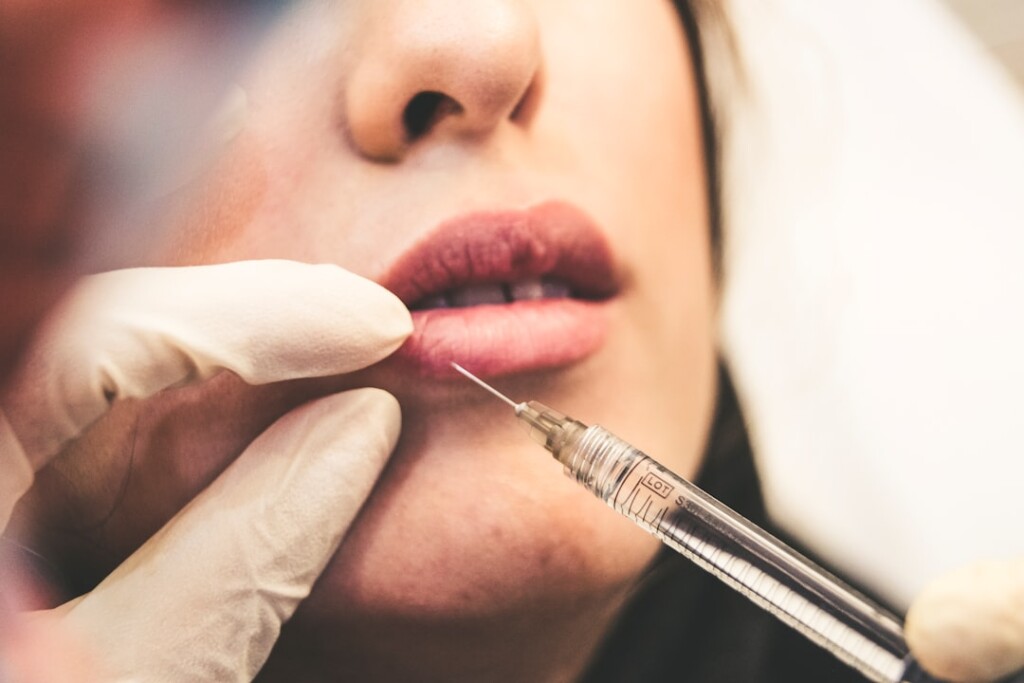
Your face is not a flat surface waiting to be filled. It is a three-dimensional structure composed of bone, fat compartments, ligaments, muscles, and skin, each layer aging at a different rate and in a different direction. The fat compartments that give your face its youthful fullness do not shrink uniformly. They deflate selectively, which is why a face that is “aging” often looks tired or hollow in specific zones rather than uniformly older. An injector who understands this architecture can trace what you see in the mirror back to what is happening beneath the surface.
For example, the tear trough, the hollow groove under the eye that makes you look tired regardless of how much sleep you got, is rarely an isolated problem. It is often the downstream effect of volume loss in the midface, where the cheek fat pad has descended or deflated, removing the structural support that once kept the under-eye area smooth. An injector who only sees the hollow under the eye and fills it directly may produce a result that looks puffy or artificial, because they are treating a symptom without addressing the structural cause. An injector who sees the midface first understands that restoring cheek support can soften the tear trough indirectly, sometimes eliminating the need for under-eye filler entirely.
This is what anatomy-first reasoning looks like in practice. It is not about knowing more anatomy for its own sake. It is about identifying where the problem actually originates before placing product. A concern that seems to live in one area may actually start somewhere else, and the injector’s job is to map that relationship before deciding where, whether, and how much to inject.
What Goes Wrong When Proximity Replaces Vetting
The risks of choosing the nearest clinic without evaluating the injector are not hypothetical. They show up in every clinic that does correction work, and they fall into a few recognizable categories.
Overdone results: The most visible failure mode. The overdone look usually comes from poor patient selection, overcorrection, or treating a symptom without addressing the facial structure behind it. When an injector places volume where the anatomy cannot carry it, the face begins to look like a foreign object rather than a refreshed version of itself. Friends may not say anything, but they notice. You notice. And the product does not disappear overnight.
Tyndall effect: This is a bluish discoloration that appears under the skin when hyaluronic acid filler is placed too superficially. Light scatters differently through the clear gel near the skin’s surface, producing a visible blue-grey tint. It is avoidable with correct placement depth, and it is correctable with hyaluronidase, the enzyme that dissolves hyaluronic acid. But it is a clear signal that the injector placed product in the wrong tissue plane, and it is one of the most common reasons patients seek correction at a different clinic.
Vascular concerns: The face contains critical blood vessels, and certain injection zones carry higher risk than others. The glabella, the nose, and the nasolabial fold are areas where blood vessels connect to the eye’s blood supply. An injector who does not understand the vascular anatomy of these zones risks compressing or occluding a vessel, which can lead to tissue necrosis or, in rare cases, vision impairment. This is why some injectors decline to treat certain zones entirely, or why they choose specific techniques and product viscosities to minimize vascular risk. That caution is not hesitation. It is safety.
Product migration: Filler placed in the wrong plane or in excessive volume can migrate from its intended location, creating lumps, asymmetry, or fullness in areas that were never treated. Migration is more likely when the injector uses a product whose rheology (flow characteristics) does not match the tissue it is placed in, or when too much product is placed in a single session rather than staged across visits.
Restraint as a Trust Signal
Some patients are advised against filler entirely, and that recommendation is one of the clearest signs you are in the right clinic. If an injector agrees to every request without screening, they are providing a service, not expert care. The difference matters. A patient whose under-eye hollow is caused by skin laxity rather than volume loss may be better served by a different treatment, or by no treatment at all. A patient whose lip anatomy cannot carry volume without distortion should hear that before hearing about which product to choose.
That restraint is part of safe practice. It is also one of the clearest signs that your injector is prioritizing outcome over volume sold. When Fahimeh tells a patient that filler is not the right tool, or that a lighter approach would serve them better, that recommendation is the clinical judgment you are actually paying for. The syringe is a commodity. The judgment is not.
What to Ask Before Booking Any Local Filler Clinic

Whether you are evaluating FAH Signature Clinique or any other clinic that appears in your “fillers near me” search, the same evaluation framework applies. These questions help you distinguish a clinic that will assess your anatomy from one that will sell you a syringe. Bring them to every consultation.
Injector Qualifications
Ask about training, not just credentials. A medical degree is a starting point, but injectable training is a specific skill set that goes beyond general licensing. Ask where the injector trained in aesthetics, how long they have been injecting, and which zones they treat most frequently. An injector who primarily treats lips may not be the best choice for jawline contouring, and vice versa. Experience in the specific zone you want treated matters more than a general list of services.
Consultation Quality
The consultation should feel more like a diagnostic conversation than a sales appointment. A strong injector examines your face at rest and in motion, asks what bothers you in your own words, and explains what they see anatomically before recommending any product. If the consultation jumps straight to pricing and product selection without assessment, that is a signal the clinic operates on volume rather than individualized care. You should leave the consultation understanding why a specific approach was recommended, not just how much it costs.
Product-Agnostic Approach
Ask whether the injector uses multiple hyaluronic acid products or a single brand. Different fillers have different rheology, meaning they vary in firmness, cohesiveness, and water attraction. A clinic that uses only one product for every zone and every patient is not matching the tool to the tissue. A clinic that selects from multiple products based on your anatomy and goals is thinking mechanically, not transactionally. The product should follow the plan, not the other way around.
Willingness to Say No
Ask directly: “Will you tell me if filler is not the right option?” The answer should be an unambiguous yes, with examples of when they have declined to treat or recommended less than the patient requested. An injector who never says no is not providing expert care. They are providing a service. For a deeper look at how this principle applies in practice, our guide on natural lip fillers and how subtle results actually work explains how restraint shapes outcomes in the most frequently requested treatment zone.
Aftercare Protocol
Ask what happens after the injection. A clinic with a genuine aftercare protocol schedules a follow-up assessment, typically at two weeks, to evaluate how the product has settled and whether any adjustment is needed. This follow-up is not a sales opportunity. It is a clinical checkpoint. If a clinic’s aftercare consists of “call us if you have questions,” that tells you the relationship ends at the transaction. For more detail on what to expect after treatment, our guide on essential aftercare tips after cosmetic procedures covers the recovery timeline across treatment types.
Evaluation Checklist at a Glance
| Criterion | What to Look For | What to Avoid |
|---|---|---|
| Injector training | Specific aesthetics training, experience in the zone you want treated, ongoing education | General credentials without injectable-specific training, vague claims of “years of experience” |
| Consultation style | Assessment of your face at rest and in motion, anatomy explained before product discussed | Jumping to pricing and product selection without examining your facial structure |
| Product selection | Multiple products available, chosen based on tissue quality and treatment zone | Single brand used for every patient and every zone regardless of anatomy |
| Willingness to decline | Clear examples of saying no or recommending less than requested | Agreement with every patient request without screening or contraindication assessment |
| Aftercare | Scheduled follow-up at approximately two weeks, clear instructions for post-treatment | “Call us if you have questions” with no scheduled follow-up or clinical checkpoint |
| Reversibility | Hyaluronic acid fillers that can be dissolved with hyaluronidase if needed | Permanent or semi-permanent fillers with no reversal option in sensitive facial zones |
Understanding Your Filler Options in Montreal
Once you have found an injector you trust, the conversation shifts from “who” to “where and how.” Filler is not applied uniformly across the face. Each zone has its own anatomy, its own aging pattern, and its own suitability criteria. Understanding these zones helps you participate in the consultation as an informed patient rather than a passive recipient.
Under-Eye (Tear Trough)
The tear trough is one of the most anatomically sensitive zones for filler, and it is also one of the most frequently requested. Patients say they look tired regardless of how much they sleep, and filler placed in the tear trough can soften that hollow. But this zone requires a product with the right rheology, typically soft and low-viscosity, and placement at the correct depth to avoid the Tyndall effect. It also requires the injector to assess whether the hollow is truly a volume issue or whether it is driven by midface deflation. Sometimes the right answer is to treat the cheek first and leave the under-eye alone. This reversibility is one of the genuine advantages of hyaluronic acid over permanent or semi-permanent fillers in this anatomically sensitive zone.
Cheeks and Midface
The midface is the structural anchor of the face. When the cheek fat pad descends or deflates with age, the effects cascade downward: the nasolabial fold deepens, the tear trough becomes more prominent, and the lower face loses its support. Restoring midface volume can address multiple concerns simultaneously, which is why a whole-face assessment often begins here rather than at the zone the patient initially identified. For patients whose primary concern is deflation rather than fine lines, collagen-stimulating treatments like Sculptra may also be discussed as an alternative or complement to direct filler, depending on whether the goal is immediate volume or gradual structural restoration.
Chin and Jawline
Chin and jawline filler addresses definition and structural balance. A receding chin can be enhanced to improve facial proportion, and jawline contouring can sharpen a boundary that has softened with age. These zones require firmer, more cohesive products that hold their shape and provide structural lift, and the placement is deeper than in the under-eye or lip. The injector must also assess the bite, the muscle activity of the masseter, and the underlying bone structure before recommending filler, because some patients are better served by neuromodulator treatment or orthodontic evaluation rather than injectable volume.
Lips
Lip filler is the most frequently requested injectable treatment, and it is also the most visible. The difference between a natural lip enhancement and an overfilled one is not the amount of product but where it is placed, which filler is chosen, and whether the injector respects the lip’s underlying anatomy. For a detailed breakdown of the anatomy, product selection, and techniques that prevent the overdone look, our guide on lip fillers and the science behind natural-looking results covers the subject in depth.
Cross-Zone Thinking
The most common error in filler planning is treating zones in isolation. A patient who says “I hate my jowls” may be responding to volume loss in the chin and jawline, but the underlying cause may begin higher in the face. A patient who says “my lips look thin” may be seeing the effect of perioral volume loss rather than lip deflation itself. The injector’s job is to trace the concern to its origin, and that often means the treatment plan does not match the patient’s initial self-diagnosis. This is why the consultation is diagnostic, not transactional, and why the first question is always “what bothers you” rather than “what product do you want.”
If you are also thinking about how long your results will last across different zones and products, our guide to filler longevity by product and area breaks down the biological factors that determine how long your investment holds.
Your Next Step
Searching “fillers near me” is the beginning of the evaluation, not the end of it. The right clinic is close enough that treatment and follow-up are manageable, and selective enough that the first conversation is about your anatomy, not a product catalog. FAH Signature Clinique on Nun’s Island is accessible from Montreal, Laval, and the South Shore, and the approach is anatomy-first: assess before recommending, recommend before pricing, and say no when no is the right answer.
Book a consultation with Fahimeh at FAH Signature Clinique to explore whether fillers are the right next step for your goals. You may leave with a treatment plan, or with the honest answer that a different approach would serve you better. Either outcome is a valid clinical decision. Contact FAH Signature Clinique today to schedule a consultation.
Frequently Asked Questions
How do I know if a filler clinic near me is qualified?
Ask about specific injectable training, not just general credentials. Look for experience in the zone you want treated, a consultation that examines your facial anatomy before discussing product, and a willingness to recommend less than you asked for. A clinic that agrees to every request without screening is providing a service, not expert care.
Should I choose the closest filler clinic to my home or office?
Proximity matters for practical reasons like follow-up visits, but it should not be the primary factor. The injector’s anatomical knowledge, product selection, and restraint determine your outcome more than the distance you traveled. The closest clinic is only the right choice if the injector meets your clinical criteria.
What questions should I ask during a filler consultation?
Ask about the injector’s training in aesthetics specifically, whether they use multiple products or just one brand, whether they will tell you if filler is not the right option, and what their aftercare protocol includes. A strong consultation feels diagnostic, not transactional, and you should leave understanding why a specific approach was recommended.
Can filler be reversed if I do not like the results?
Hyaluronic acid fillers can be dissolved with hyaluronidase, an enzyme that breaks down the product. This reversibility is one of the advantages of hyaluronic acid over permanent or semi-permanent fillers, particularly in sensitive zones like the under-eye. Not all fillers are reversible, so ask which product is being used and whether it can be dissolved.
What is the Tyndall effect and how do I avoid it?
The Tyndall effect is a bluish discoloration under the skin caused by filler placed too superficially. Light scatters through the clear gel near the surface, producing a visible blue-grey tint. It is avoidable with correct placement depth and correctable with hyaluronidase. It is one of the most common reasons patients seek correction at a different clinic.