
Lip filler aftercare do’s and don’ts matter more than most patients realize, because the first 48 hours after injection are when the hyaluronic acid gel integrates with your native tissue. What you do, and what you avoid, during this window directly affects how cleanly the filler settles, how much you swell and bruise, and how natural your final result looks. Understanding the biology behind each instruction makes it far easier to follow through, because you are not simply memorizing a list of rules. You are understanding why each one exists.
Think of this as the conversation Fahimeh has with patients before they leave FAH Signature Clinique after a lip treatment. Every recommendation here has a biological reason behind it, and once you understand that reason, the aftercare stops feeling arbitrary and starts making sense.
What’s Happening in Your Lips Right After Treatment

The moment hyaluronic acid filler is deposited into your lip, three biological processes begin simultaneously, and understanding them is the key to understanding why aftercare instructions exist at all. The gel occupies physical space where volume was lost, it begins attracting water from surrounding tissue through its hydrophilic properties, and the tissue around it mounts an inflammatory response to the trauma of the needle. All three are normal, expected, and temporary, but each one is influenced by what you do next.
The Hydrophilic Effect: Why Your Lips Will Look Fuller Before They Look Final
Hyaluronic acid is a molecule that naturally occurs in your skin and connective tissue, and one of its defining properties is that it binds water. When a cross-linked hyaluronic acid filler is injected into the lip, the gel matrix begins drawing water from surrounding tissue into its structure. This hydrophilic effect takes several days to peak, which is why your lips may actually look slightly fuller on day three than they did immediately after injection. This is not the filler migrating or swelling uncontrollably. It is the gel doing exactly what it was designed to do: hydrating and integrating with your tissue.
This biological reality is the reason Fahimeh prefers staged treatment for first-time patients and for anyone whose goal is subtlety. Adding more product before the water-binding phase is complete risks overcorrecting, because the full effect of the first session is not yet visible. If you have already read our guide on the science behind natural-looking lip fillers, this principle will be familiar. The hydrophilic effect is also why the two-week follow-up assessment matters: that is when swelling has fully resolved and the filler has integrated, which gives the most accurate picture of the final result.
Inflammation and Vascularity: Why Swelling Is Expected, Not a Concern
The lips are one of the most vascular areas on the face. The vermilion, the red portion of the lip, is packed with superficial blood vessels, which is part of what gives it its color. When a needle passes through this tissue, even with the most conservative technique, it creates micro-trauma that triggers an inflammatory response. Blood flow to the area increases, capillaries leak small amounts of fluid into the surrounding tissue, and the lip swells. This is a normal part of healing, not a sign that something has gone wrong.
Most patients see the peak of swelling within the first 24 to 48 hours, after which it gradually subsides over the next three to five days. Some patients notice mild residual fullness for up to two weeks, particularly in the upper lip, which tends to swell slightly more than the lower because its tissue is thinner and more loosely structured. Bruising is less universal than swelling but is entirely normal, especially along the vermilion border where superficial vessels are most concentrated.
Tissue Integration: Why the First 48 Hours Are Critical
Well-placed hyaluronic acid filler does not sit as a discrete bolus within the lip. Over the first several days, the gel integrates with the surrounding tissue, becoming part of the native architecture rather than a foreign deposit. This integration is what allows the filler to move naturally with the orbicularis oris muscle during speech and expression. During the integration window, the gel is still relatively mobile within the tissue, which means external pressure, heat, or increased blood flow can displace it before it has settled into its intended position. This is the biological basis for nearly every aftercare instruction that follows.
The First 48 Hours: What to Do (and Avoid)
The first two days after lip filler treatment are the most critical window in the entire healing process. During this time, the gel is integrating, swelling is peaking, and the tissue is most vulnerable to factors that can worsen bruising or displace the filler. The following guidelines are organized by what to do and what to avoid, with the biological reasoning behind each one.
| Instruction | Do or Don’t | Why It Matters Biologically |
|---|---|---|
| Apply cold compress wrapped in cloth | Do | Cold constricts blood vessels, reducing blood flow to the area, which limits swelling and bruising |
| Sleep with head elevated on 2-3 pillows | Do | Gravity helps prevent fluid pooling in the lip, which is already inflamed and prone to edema |
| Drink plenty of water | Do | Hydration supports the hydrophilic behavior of hyaluronic acid, helping the gel integrate smoothly into tissue |
| Avoid strenuous exercise | Don’t | Elevated heart rate and blood pressure increase blood flow to the face, which worsens swelling and can promote bruising |
| Avoid heat exposure (saunas, hot yoga, hot showers) | Don’t | Heat dilates blood vessels, increasing blood flow and inflammation in tissue that is already responding to injection trauma |
| Avoid alcohol for 24-48 hours | Don’t | Alcohol is a vasodilator that widens blood vessels and can thin the blood, both of which worsen bruising and swelling |
| Avoid pressure on the lips (puckering, pressing, massaging) | Don’t | External pressure can displace filler that has not yet integrated with native tissue, distorting placement |
| Avoid blood-thinning supplements (fish oil, vitamin E, ginger) | Don’t | These substances inhibit platelet aggregation, making bruising more likely and more visible |
| Use arnica gel or supplements if desired | Do (optional) | Arnica has anti-inflammatory properties that may reduce bruising severity, though evidence is modest |
| Stick to gentle, fragrance-free skincare | Do | The skin barrier is temporarily compromised, and active ingredients like retinoids or acids can irritate already sensitive tissue |
Why Heat Is the Most Common Aftercare Mistake
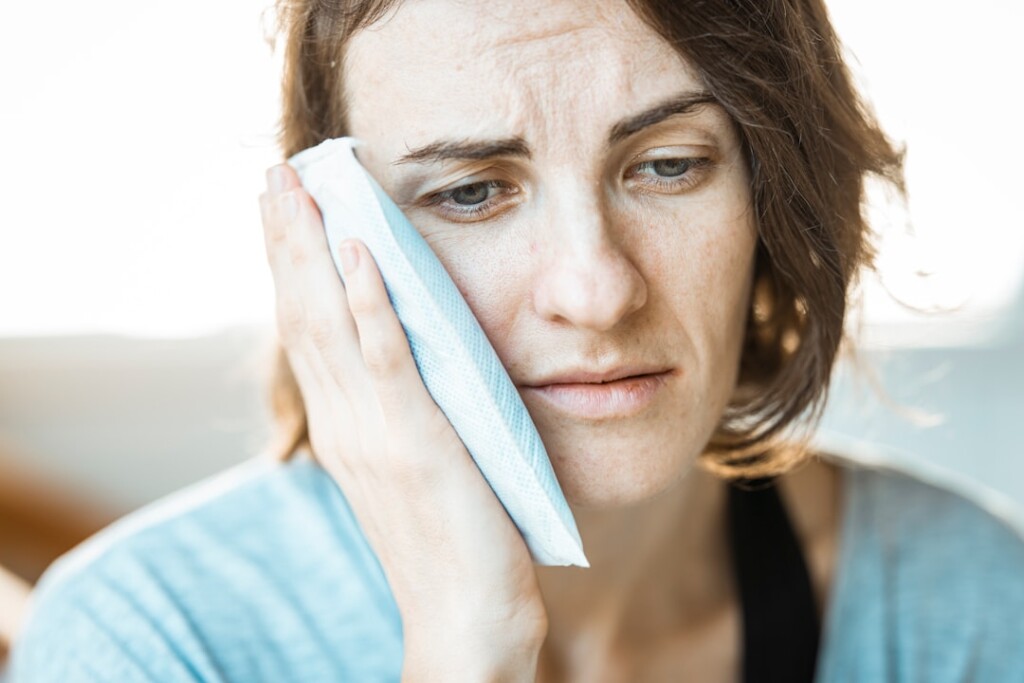
The single most common aftercare instruction patients overlook is avoiding heat, and it is also the one with the clearest biological reasoning. When you expose your face to heat, whether from a sauna, a hot yoga studio, a long hot shower, or even a heating pad, your blood vessels dilate. Vasodilation increases blood flow to the skin and underlying tissue, which is the opposite of what you want during the inflammatory phase of healing. More blood flow means more fluid leaking into the tissue, more swelling, and a higher likelihood that minor bruising becomes more visible and lasts longer.
Cold has the opposite effect. A cold compress wrapped in a soft cloth causes vasoconstriction, narrowing the blood vessels and reducing blood flow to the area. This is why cold compresses are one of the most effective tools for managing swelling in the first 48 hours. Apply for 10 to 15 minutes at a time, with breaks in between. Never apply ice directly to the skin, as the lip tissue is delicate and ice can cause damage. The cloth barrier matters.
Why Pressure Distorts Filler Placement
During the first 48 hours, the hyaluronic acid gel is still relatively mobile within the tissue. It has not yet fully integrated with the surrounding architecture, which means it can be shifted by external pressure. This is why we ask patients to avoid pressing, massaging, puckering, or manipulating the lips in any way during this window. Even habits you do not think about, like biting your lip, pressing your lips together while thinking, or sleeping face-down, can apply enough pressure to shift the filler before it has settled.
The same principle applies to kissing, drinking through a straw, and any activity that creates suction or pressure on the lip tissue. None of these will ruin your results if they happen once briefly, but repeated pressure during the integration window can distort placement, particularly along the vermilion border where definition filler is placed more superficially. If you want to understand why placement precision matters so much for natural results, our guide on how subtle lip filler results actually work covers the anatomy of the vermilion border and white roll in detail.
Arnica, Bromelain, and Bruising Management
Some patients are more prone to bruising than others, and this is largely a function of individual vascular anatomy and skin transparency rather than technique. If you know you bruise easily, arnica gel or oral arnica supplements can help. Arnica contains compounds that reduce capillary leakage and support the body’s clearance of pooled blood, which can make bruises fade faster. Bromelain, an enzyme found in pineapple, has similar anti-inflammatory properties and is sometimes taken orally before and after treatment to reduce bruising. Neither is a guarantee, but both have modest evidence behind them and are safe for most patients. If you are on prescription blood thinners, do not add supplements without checking with your physician first.
Week One and Beyond: Supporting Long-Term Results
After the first 48 hours, the most critical window has passed, but the filler is still settling and integrating with your tissue for up to two weeks. The aftercare emphasis shifts from preventing displacement and managing acute swelling to supporting healthy tissue integration and protecting the longevity of your results.
Days 3 to 7: The Settling Phase
By day three, most of the acute swelling has subsided, though you may still notice mild fullness, particularly in the morning when fluid tends to pool in dependent areas. The hydrophilic effect is still active, meaning the filler is continuing to draw water and integrate with surrounding tissue. This is why your lips may look slightly different on day five than they did on day three, and why the final result is best assessed at the two-week mark rather than earlier.
During this phase, you can generally return to your normal exercise routine, resume moderate heat exposure like warm showers, and go back to your usual skincare products. Continue to avoid pressing or massaging the lips unless Fahimeh has specifically instructed you to do so. Some injectors teach gentle lip massage for specific corrections, but this should only be done with direct guidance, because untrained massage can displace filler that is still integrating.
Days 7 to 14: Integration Complete
By the end of the second week, the filler has fully integrated with your native tissue, the hydrophilic effect has peaked, and residual swelling has resolved. This is the point where the result you see in the mirror is the result you will live with until the filler gradually metabolizes. If you have a follow-up assessment scheduled, this is when it happens. Fahimeh evaluates the result at rest and in motion, checks symmetry, and determines whether a small conservative refinement is needed or whether the result is already where it should be.
Long-Term Habits That Protect Your Results

Once the filler has settled, a few ongoing habits help maintain the quality and longevity of your results. Daily sunscreen is essential, not because UV rays break down hyaluronic acid directly, but because sun damage degrades the collagen and elastin framework that gives filler its structural context. A face with healthy, well-supported tissue holds its result longer than one where the underlying scaffold is degrading. Staying well-hydrated supports the hydrophilic behavior of the filler, because hyaluronic acid needs available water to maintain its plump, hydrated quality. And avoiding smoking, which accelerates skin aging and reduces collagen synthesis, helps preserve the tissue environment the filler sits in.
For a broader understanding of how product chemistry, treatment area, and individual biology interact to determine how long your results will last, our detailed guide on filler longevity timelines covers each variable in depth. The lips are the most metabolically active treatment area on the face because the orbicularis oris muscle is in constant motion, which means lip fillers typically last 6 to 9 months, sometimes less for patients with faster metabolism or higher exercise intensity.
If you are interested in general post-procedure protocols that apply across cosmetic treatments beyond lip fillers, our broader aftercare guide for cosmetic procedures covers swelling management, skincare simplification, and activity adjustment principles that are relevant to a range of treatments.
Common Questions About Lip Filler Healing
How Long Does Swelling Last After Lip Filler?
Most swelling peaks within the first 24 to 48 hours and resolves over three to five days. Some patients notice mild residual fullness for up to two weeks, particularly in the upper lip. The timeline varies with individual vascular anatomy, the volume injected, and how closely aftercare instructions are followed. Patients who avoid heat, pressure, and strenuous exercise during the first 48 hours typically experience less swelling overall and resolve it faster.
Can I Wear Lipstick or Lip Balm After Treatment?
It is best to avoid lip products for the first 24 hours. Lipsticks, glosses, and balms require pressure to apply, and many contain ingredients like menthol, peppermint, or fragrances that can irritate tissue that is already inflamed. After 24 hours, a simple, fragrance-free lip balm is fine. Wait until the injection sites have fully closed before using any lip product, which usually happens within the first day. If you use a lip balm with active ingredients like retinol or salicylic acid, wait at least 72 hours.
When Can I Exercise Again After Lip Filler?
Avoid strenuous exercise for 48 hours after treatment. Elevated heart rate and blood pressure increase blood flow to the face, which worsens swelling and can promote additional bruising. Light walking is fine from day one. Moderate exercise can typically resume on day three. High-intensity training, hot yoga, and any activity that significantly raises your heart rate or involves heat exposure should wait until day three at the earliest, and day five is safer if you bruised more than expected.
When Will My Lips Look Final After Filler?
The final result is best assessed at the two-week mark. By that point, acute swelling has resolved, the hydrophilic effect has peaked, and the filler has fully integrated with your native tissue. Your lips may continue to look slightly different from day to day based on hydration, sleep, and minor fluid shifts, but the structural result is stable by week two. This is why Fahimeh schedules the follow-up assessment at two weeks rather than sooner, because evaluating before the filler has settled leads to inaccurate judgments about whether refinement is needed.
When to Contact Your Injector
Most post-treatment effects are mild and self-limiting. Swelling, mild bruising, tenderness, and a feeling of fullness or tightness in the lips are all expected in the first few days. However, there are specific signs that warrant a call to the clinic, and knowing them in advance is part of being an informed patient.
Contact FAH Signature Clinique if you experience any of the following: severe or worsening pain that does not respond to over-the-counter pain relief, significant and increasing asymmetry between the two lips, blanching or a white, pale appearance in any part of the lip, a bluish or dark discoloration that appears after the initial treatment day, or any signs of vascular compromise such as the lip feeling cold to the touch or showing areas of mottled coloring. These are rare, but they are time-sensitive, and early intervention matters.
One of the key safety advantages of hyaluronic acid fillers is that they are reversible. If the filler is misplaced, if there is a vascular concern, or if the result does not meet expectations, hyaluronidase, an enzyme that dissolves the gel, can be injected to remove or adjust the product. This is a safety feature unique to HA fillers and one of the reasons they remain the default choice for the lips and other delicate areas. Non-reversible products like Sculptra or Radiesse cannot be dissolved, which is why they are never used in the lips.
If you have just had lip filler treatment and are unsure whether something you are experiencing is normal, do not hesitate to call. We would always rather you reach out and learn that what you are noticing is expected than have you wait on something that needs attention. And if you are still in the research phase, deciding whether lip fillers are the right step for you, book a consultation with Fahimeh at FAH Signature Clinique to explore your options. You may leave with a personalized treatment plan, or with the honest answer that a different approach would serve you better. Either outcome is a valid clinical decision, and either one moves you closer to understanding your face with greater clarity.
Frequently Asked Questions
How long does swelling last after lip filler?
Most swelling peaks within the first 24 to 48 hours and resolves over three to five days. Some patients notice mild residual fullness for up to two weeks, particularly in the upper lip. Avoiding heat, pressure, and strenuous exercise during the first 48 hours helps reduce swelling overall.
Can I wear lipstick or lip balm after lip filler treatment?
Avoid lip products for the first 24 hours. Lipsticks and glosses require pressure to apply and may contain irritating ingredients. After 24 hours, a fragrance-free lip balm is fine. If your balm contains active ingredients like retinol or salicylic acid, wait at least 72 hours.
When can I exercise again after getting lip filler?
Avoid strenuous exercise for 48 hours after treatment, as elevated heart rate and blood pressure increase blood flow to the face and worsen swelling. Light walking is fine from day one, and moderate exercise can typically resume on day three.
When will my lips look final after filler?
The final result is best assessed at the two-week mark, when swelling has resolved, the hydrophilic effect has peaked, and the filler has fully integrated with your native tissue. This is why follow-up assessments are typically scheduled at two weeks rather than sooner.
What are the signs I should contact my injector after lip filler?
Contact your injector if you experience severe or worsening pain, significant and increasing asymmetry, blanching or pale areas in the lip, bluish discoloration appearing after the treatment day, or signs of vascular compromise such as the lip feeling cold or showing mottled coloring. These are rare but time-sensitive.