

If your search for microneedling near me has brought you here from Montreal or Nun’s Island, you are likely past the stage of browsing general skincare advice and into the stage of evaluating whether a clinical treatment is worth the investment. This is the right stage to slow down and understand the biology, because the difference between a treatment that triggers real collagen production and one that merely reddens the skin comes down to precision: needle depth, device quality, and the practitioner’s ability to read your skin and adjust accordingly.
What Is Microneedling? The Science Behind the Results
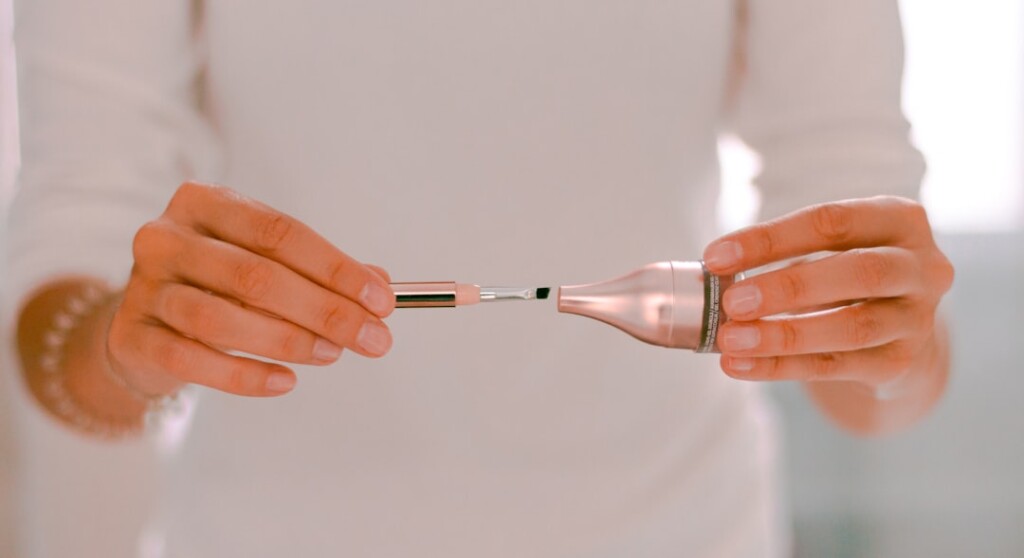
Microneedling, also called collagen induction therapy, creates thousands of controlled micro-injuries in the skin using a medical-grade device fitted with fine needles. When those needles penetrate the epidermis and reach the dermal layer, they trigger a three-phase wound-healing cascade that culminates in new collagen and elastin production. The skin perceives each puncture as a micro-wound and responds by rebuilding the surrounding tissue, which is why the results are structural rather than superficial.
The mechanism is not mysterious. It is the same wound-healing response your body uses to repair any tissue injury, only here it is harnessed deliberately and at a microscopic scale. Understanding the three phases helps explain why results are gradual and why the quality of the device matters more than the number of needles on it.
Phase 1: Inflammation (Hours to Days)
When the needles penetrate the skin, platelets aggregate at each puncture site and release a coordinated wave of growth factors, including platelet-derived growth factor (PDGF) and transforming growth factor-beta (TGF-β). Neutrophils and macrophages migrate to the micro-wound sites, clearing debris and releasing additional signalling proteins. This inflammatory phase is brief but essential: it is the trigger that initiates everything that follows. The redness you see after a session is the visible sign of this phase, not a side effect to be avoided.
Phase 2: Proliferation and Fibroplasia (Days to Weeks)
This is where the structural work begins. Fibroplasia refers to the proliferation and migration of fibroblasts into the treatment zone. Fibroblasts are the cells responsible for producing collagen, elastin, and the extracellular matrix that gives skin its structural integrity. As they arrive in the micro-wounded dermis, they begin depositing fresh collagen fibres, primarily type III collagen initially, which is the early, finer form. This phase also includes angiogenesis, the formation of new capillaries that improve nutrient and oxygen delivery to the treated tissue.
Phase 3: Remodeling and Neocollagenesis (Weeks to Months)
Over the following weeks, the early type III collagen is gradually replaced by type I collagen, the stronger, more organized form that provides long-term structural support. This process, called neocollagenesis, is why microneedling results continue to improve long after the skin has visibly healed from the session. The collagen matrix matures and reorganizes over three to six months, meaning the full benefit of a single session is not apparent until well after the appointment. This delayed timeline is biological, not a marketing delay. If you have already read our comparison of mesotherapy versus microneedling, you know that microneedling’s effects are almost entirely delayed because they depend on this remodeling process.
Clinical Microneedling vs. At-Home Rollers: Why It Matters
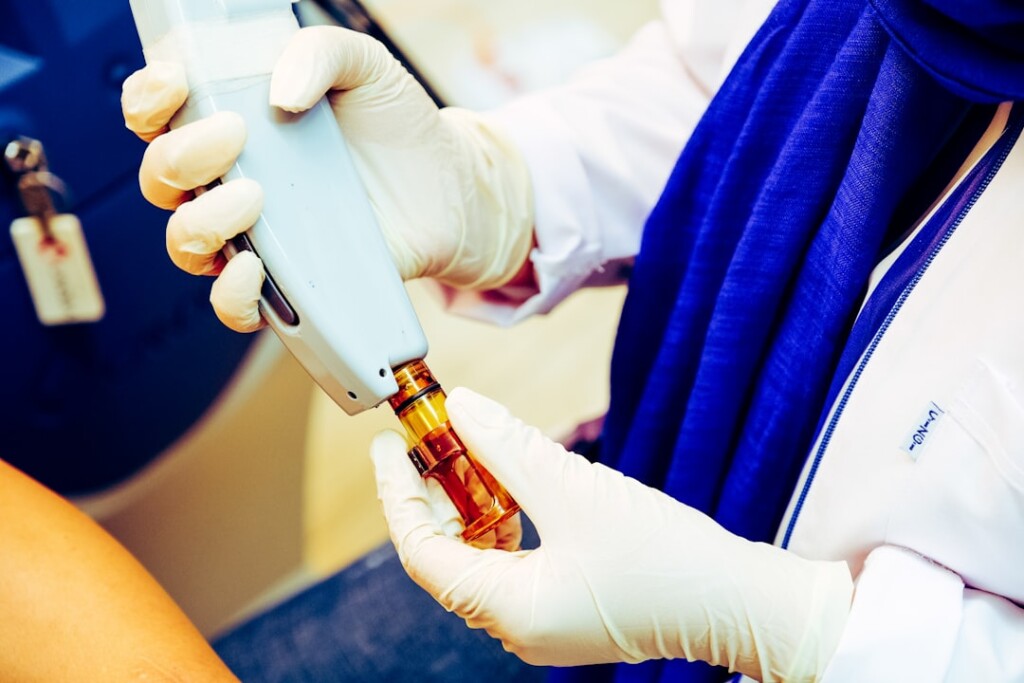
The difference between clinical microneedling and at-home dermarollers is not cosmetic. It is biological. Clinical devices use motorized, medical-grade pens with adjustable needle depths up to 2.5 mm, sterile single-use cartridges, and controlled speed and pressure that create clean, vertical punctures. At-home dermarollers feature fixed needle depths typically 0.25 to 0.5 mm, reuse the same needle head across multiple sessions, and create angled punctures that can tear the skin rather than cleanly penetrate it. The depth limitation alone means at-home devices cannot reach the reticular dermis, which is where the collagen remodeling that produces visible structural improvement actually occurs.
Needle geometry matters as much as needle depth. A dermaroller works by rolling a wheel of needles across the skin, which means the needles enter at an angle and exit at a different angle, creating a trapezoidal wound rather than a clean vertical channel. Over repeated use, the needles on a dermaroller also dull, bend, and develop microscopic burrs that can tear the epidermis and increase the risk of scarring and infection. Clinical pens, by contrast, use a stamping motion with needles that enter and exit vertically, creating precise channels with minimal lateral damage.
There is a legitimate role for very shallow at-home devices in maintaining skin between clinical sessions, but they are not a substitute for clinical treatment. The comparison below summarizes why.
| Parameter | Clinical Microneedling | At-Home Dermaroller |
|---|---|---|
| Device type | Motorized medical-grade pen | Manual roller wheel |
| Needle depth | 0.25 to 2.5 mm, adjustable per area | 0.25 to 0.5 mm, fixed |
| Needle geometry | Vertical stamping, clean channels | Angled rolling, trapezoidal wounds |
| Sterility | Single-use sterile cartridges | Reused across sessions |
| Target tissue | Epidermis to reticular dermis | Epidermis to superficial papillary dermis |
| Collagen response | Fibroplasia and neocollagenesis in deep dermis | Superficial inflammation, limited collagen induction |
| Risk profile | Low when performed by trained practitioner | Higher risk of tearing, infection, scarring |
| Ideal use | Primary treatment for scarring, texture, collagen loss | Light maintenance between clinical sessions |
What to Expect: Sessions, Downtime and Realistic Timelines
A clinical microneedling session at FAH Signature Clinique begins with a skin assessment, not a device. Fahimeh evaluates your skin’s thickness, sensitivity, active concerns, and the specific areas being treated before selecting needle depth and protocol. Topical numbing is applied and left for 20 to 30 minutes. The treatment itself takes 20 to 40 minutes depending on the area. Most patients describe the sensation as a vibrating or scratching feeling, manageable with numbing rather than painful.
What Happens After Each Session
Redness resembling a mild sunburn is expected for 1 to 3 days. Some patients experience mild swelling for 24 to 48 hours, particularly in thinner-skinned areas like the under-eyes or neck. The skin may feel dry or slightly flaky for 3 to 5 days as the stratum corneum renews. Sun protection and gentle skincare are non-negotiable during this window. Most patients return to normal activities the next day, though makeup application is typically avoided for 24 hours.
How Many Sessions and How Far Apart
Most treatment protocols involve 3 to 6 sessions spaced 4 to 6 weeks apart. The spacing is not arbitrary. It reflects the collagen remodeling timeline: each session triggers neocollagenesis that takes 4 to 6 weeks to begin producing visible structural change, and overlapping sessions too closely does not accelerate results. It simply stacks inflammation without giving the tissue time to respond. For acne scarring, a full course of 6 sessions is often needed. For general textural improvement and collagen maintenance, 3 to 4 sessions may suffice.
When Results Become Visible
The first visible improvement is usually a smoother, more even-toned appearance within a week of the first session, largely from the superficial healing response. The deeper collagen-building benefits become visible over 4 to 8 weeks as neocollagenesis progresses. Because collagen continues to mature for 3 to 6 months after each session, the full result of a treatment course is often not apparent until several weeks after the final appointment. Maintenance sessions every 6 to 12 months sustain the dermal environment.
Microneedling and PRP: A Powerful Combination

When microneedling is paired with platelet-rich plasma (PRP) therapy, the two treatments share a mechanism and compound each other’s effect. Microneedling creates thousands of micro-channels in the epidermis and superficial dermis. When PRP is applied immediately after, those channels allow concentrated growth factors to penetrate far deeper into the dermis than topical application or superficial injection alone would achieve. The mechanical stimulus of microneedling independently activates fibroblasts, while the PRP supplies a concentrated dose of the same growth factors, PDGF and TGF-β, that the wound-healing cascade already relies on. The result is a more robust fibroplasia response than either treatment produces alone.
This combination is one of the most evidence-supported pairings in aesthetic medicine, particularly for patients with acne scarring, enlarged pores, or diffuse textural concerns. PRP is entirely autologous, derived from a small blood draw processed in a centrifuge during your appointment, which means there is no risk of allergic reaction or foreign body response. For patients who value treatments grounded in their own biology, this combination offers powerful synergy without introducing any synthetic material.
For a complete understanding of how PRP works, including the growth factor cascade and what results to expect session by session, our detailed guide to PRP for skin rejuvenation covers the biology in depth.
Is Microneedling Right for You? Skin Concerns It Addresses
Microneedling is a structural treatment. It addresses skin concerns rooted in dermal architecture: texture, scarring, pore size, and the early softening of skin firmness that comes from gradual collagen loss. It is not a hydration treatment, a volume treatment, or a solution for loose skin. Matching the tool to the concern is what separates a satisfying outcome from a frustrating one.
Concerns That Respond Well
Acne scarring (mild to moderate), enlarged pores, stretch marks, fine lines and early rhytids, general textural irregularity, mild pigmentation concerns including post-inflammatory hyperpigmentation, and the overall dullness that accompanies declining dermal density. These are concerns where the skin’s surface architecture needs rebuilding, which is exactly what fibroplasia and neocollagenesis address.
When Microneedling Is Not the Right Answer
Active acne or rosacea in flare is a contraindication, because the inflammation and needle trauma can worsen both conditions. A history of keloid scarring requires careful evaluation, because the wound-healing cascade that microneedling triggers is the same cascade that can produce hypertrophic scarring in prone individuals. Significant skin laxity, where the primary issue is loose skin rather than texture, will not respond meaningfully to microneedling alone. And patients seeking deep hydration or nutrient delivery are better served by mesotherapy, which deposits active compounds directly into the dermis rather than relying on the skin’s own repair response. For patients whose primary concern is volume loss rather than skin quality, collagen-stimulating treatments like Sculptra address the structural deficit more directly.
Fahimeh approaches each assessment with the goal of understanding what is actually happening in your skin before recommending any treatment. You may leave with a plan that includes microneedling, microneedling with PRP, a combined protocol, or the honest answer that a different approach would serve you better. The willingness to say no when a treatment is not the right fit is one of the clearest signs that the recommendation prioritizes outcome over volume sold.
Microneedling Near Me: Personalized Consultation in Montreal
If you are in the early stages of research or ready to discuss a treatment plan, we welcome the conversation. Book a consultation with Fahimeh at FAH Signature Clinique on Nun’s Island to determine whether microneedling, microneedling with PRP, or a different protocol is the right next step for your skin. You may leave with a personalized plan, or with the honest answer that a different approach would serve you better. Either outcome is a valid clinical decision.
Frequently Asked Questions
How many microneedling sessions will I need?
Most patients need 3 to 6 sessions spaced 4 to 6 weeks apart. Acne scarring typically requires a full course of 6 sessions, while general textural improvement may need only 3 to 4. The exact number depends on your skin condition and how your tissue responds to each session.
Is microneedling painful?
Topical numbing is applied 20 to 30 minutes before treatment. Most patients describe the sensation as a vibrating or scratching feeling that is manageable rather than painful. Thinner-skinned areas like the under-eyes or forehead may feel more sensitive than thicker areas like the cheeks.
Can I use an at-home dermaroller instead of clinical microneedling?
At-home dermarollers use shallow, fixed-depth needles that cannot reach the reticular dermis where structural collagen remodeling occurs. They may be useful for light maintenance between clinical sessions, but they are not a substitute for medical-grade treatment and carry a higher risk of skin damage from dull or bent needles over repeated use.
How does microneedling with PRP differ from microneedling alone?
PRP adds concentrated growth factors from your own blood to the micro-channels created by microneedling, amplifying the fibroplasia and neocollagenesis response. The combination produces more robust collagen stimulation than microneedling alone, particularly for acne scarring and diffuse textural concerns.
What is the downtime after microneedling?
Expect 1 to 3 days of redness resembling a mild sunburn, with possible mild swelling for 24 to 48 hours. The skin may feel dry or slightly flaky for 3 to 5 days. Most patients return to normal activities the next day. Sun protection is essential during the healing window.