
A non-surgical facelift is not a single procedure. It is a customized combination of injectable and skin-rejuvenation treatments that together address the structural and textural changes aging brings to the face. When non-surgical facelift options are compared honestly, the central finding is this: no single modality is universally best. The right approach depends on your facial anatomy, what has actually changed beneath the surface, and what you want the result to look like.
The fear of looking “overdone,” “puffy,” or “frozen” is the most common concern patients bring to a first consultation, and it is a legitimate one. Those outcomes are real, but they are not inevitable. They almost always result from poor patient selection, overcorrection, or treating a visible symptom without understanding the anatomy driving it. The purpose of comparing these options here is to give you the biological framework to evaluate which treatment, or combination of treatments, addresses your actual concern rather than chasing what you see in the mirror.
What ‘Non-Surgical Facelift’ Actually Means

The term “non-surgical facelift” is a marketing label, not a clinical one. It describes a category, not a procedure. There is no single injection, device, or protocol that replicates what a surgical facelift does: repositioning descended tissue, removing excess skin, and restoring the deep structural scaffold of the face. What non-surgical treatments can do is address many of the biological changes that make a face look older, often in a way that looks more natural and more graduated than surgery, and always without the downtime, incisions, or irreversibility of an operating-room procedure.
The face ages through several simultaneous processes, and each one calls for a different tool. Bone resorption narrows the jaw and flattens the midface. Fat compartments shift: volume is lost in the cheeks and temples while accumulating along the jawline and under the chin. The dermis thins as collagen production slows, leaving skin looser, duller, and less resilient. Dynamic muscles etch lines into the forehead, between the brows, and around the eyes through years of repeated contraction. No single treatment addresses all of these. A non-surgical facelift, when done well, is the strategic layering of different tools, each targeting a specific layer of the aging process.
This is why the consultation matters more than the product. The right starting point is not “which filler should I get?” but “what is actually happening in my face, and which tool addresses that cause?” At FAH Signature Clinique, that question is answered through a diagnostic conversation with Fahimeh that assesses your facial structure, skin quality, muscle activity, and the relationship between zones before any treatment is recommended. A concern that seems to live in one area may actually start somewhere else. An under-eye hollow may be influenced by the cheek. A deep fold beside the mouth may reflect a broader loss of midface support. Treating the visible crease without understanding the structural cause behind it is one of the fastest ways to create an overdone result.
The Main Options: What Each One Does
Five categories of treatment form the backbone of non-surgical facial rejuvenation. Each works on a different biological system, has a different timeline, and suits a different anatomical problem. Understanding what each one actually does, in biological terms, is what allows you to evaluate whether it is the right tool for your concern.
Dermal Fillers (Hyaluronic Acid)
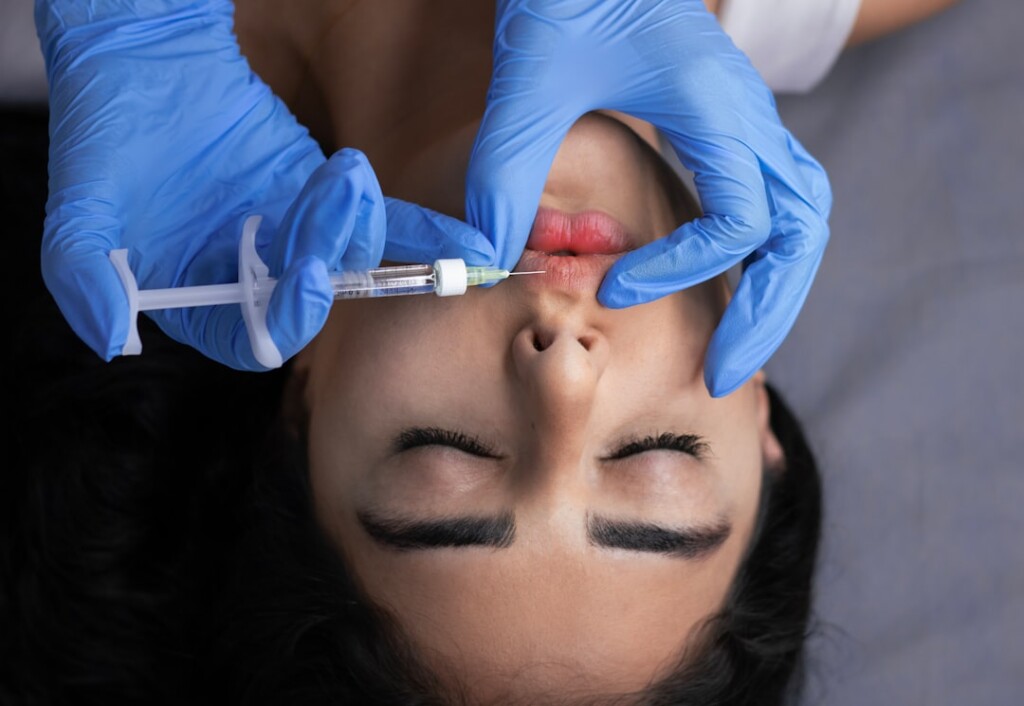
Hyaluronic acid (HA) fillers add immediate volume. They are injected into specific tissue planes to restore contour, fill defined hollows, and provide structural support where bone or fat has receded. The gel binds water and occupies space the moment it is placed, which is why results are visible on the day of treatment.
HA fillers are the most versatile tool in the injectable category because they can be placed at different depths and with different firmness levels depending on the area. A firm, high-viscosity product suits the jawline; a soft, mobile product suits the lips or tear troughs. Critically, HA fillers are reversible. If the result is not right, or if a vascular complication occurs, an enzyme called hyaluronidase can dissolve the product. That reversibility is why HA fillers remain the default for first-time patients and for anatomically sensitive areas. Results typically last 6 to 18 months depending on the area, product, and your individual metabolism.
For a detailed look at how HA fillers work alongside neurotoxins in facial contouring, our article on non-surgical jawline contouring explains how structural filler placement along the mandible restores definition lost to bone resorption.
Neurotoxins (Botox and Dysport)
Neurotoxins work on an entirely different biological system. Botulinum toxin type A, the active ingredient in both Botox (onabotulinumtoxinA) and Dysport (abobotulinumtoxinA), blocks the release of acetylcholine at the neuromuscular junction. In plain terms, it temporarily reduces the ability of a targeted muscle to contract. This softens the dynamic lines that repeated muscle movement etches into the skin over years: the vertical “11s” between the brows, horizontal forehead lines, and crow’s feet around the eyes.
Neurotoxins do not add volume, restore structure, or improve skin quality. They address one specific problem: hyperactive muscle contraction. When that is the primary driver of a line or crease, neurotoxin is the right tool. When the concern is volume loss or skin laxity, neurotoxin alone will not address it. The “frozen” look patients fear comes from overcorrecting muscle activity, not from the product itself. A conservative approach preserves natural expression while softening the lines that read as stress or fatigue.
Results appear within 3 to 14 days depending on the product and area, and typically last 3 to 4 months. For a full breakdown of how Botox and Dysport differ in onset, diffusion, and clinical application, our guide comparing Botox vs. Dysport explains why the choice between them depends on which area is being treated and your specific muscle anatomy.
Sculptra (Biostimulators)
Sculptra works through a fundamentally different mechanism from both fillers and neurotoxins. Its active ingredient, poly-L-lactic acid (PLLA), does not occupy space as a gel does. Instead, the PLLA microparticles create a controlled stimulus in the deep dermis and subcutaneous tissue that triggers your own fibroblasts to produce new collagen. This process, called neocollagenesis, gradually rebuilds the structural scaffolding beneath the skin over weeks and months.
The result is not immediate. Sculptra provides almost no visible volume on the day of treatment. The collagen-building process takes 6 to 12 weeks to become visible and continues to develop across a series of sessions, typically 2 to 3 appointments spaced 4 to 6 weeks apart. The tradeoff is patience for longevity: because the improvement comes from your own collagen rather than a foreign gel, results can last 18 to 24 months or longer. This gradual timeline also means there is no dramatic day-of transformation that announces itself to colleagues. People may notice you look better without being able to identify why.
Sculptra is not reversible. Unlike HA fillers, it cannot be dissolved with hyaluronidase, which is why injector expertise, conservative placement, and proper reconstitution are non-negotiable. It is also not suited for every area: Sculptra is not used in the lips, tear troughs, or fine-line treatment in thin-skinned areas. It excels for patients whose concern is diffuse volume loss across the cheeks, temples, and midface rather than a single isolated hollow. Our detailed guide to collagen-stimulating treatments and biostimulators covers the full protocol, the biology of fibroplasia, and how Sculptra compares to other biostimulators like Radiesse and Ellanse.
PRP (Platelet-Rich Plasma)

Platelet-rich plasma therapy uses your own blood to stimulate skin renewal. A small blood draw is centrifuged to concentrate the platelet-rich plasma fraction, which is then injected or microneedled into the skin. When activated, platelets release a coordinated wave of growth factors, including platelet-derived growth factor (PDGF), transforming growth factor-beta (TGF-β), and vascular endothelial growth factor (VEGF). These signalling proteins recruit fibroblasts, stimulate new collagen synthesis, and promote angiogenesis, the formation of new capillaries that improve oxygen and nutrient delivery to the dermis.
PRP is a tissue-quality treatment, not a volume treatment. It will not replace lost facial fat or re-drape lax skin. What it does is improve dermal density, skin texture, luminosity, and fine-line visibility from beneath, using entirely your own biology. Because it is autologous, there is no risk of allergic reaction or foreign-body response, which makes it an appealing option for patients who are cautious about introducing synthetic substances.
Results are cumulative across a course of typically 3 sessions spaced 4 to 6 weeks apart, with continued improvement for 3 to 6 months after the final session as collagen matures. For the full biological breakdown of how growth factors work at the dermal level, our article on PRP for skin rejuvenation explains the mechanism in detail.
Mesotherapy
Mesotherapy delivers a customized cocktail of hyaluronic acid, vitamins, amino acids, peptides, and antioxidants directly into the superficial dermis through a series of microinjections. The depth, typically 1 to 2 millimetres, is deliberate: it bypasses the epidermal barrier that blocks most topical ingredients from reaching the tissue where fibroblasts actually reside and function.
Mesotherapy works through two simultaneous mechanisms: the mechanical stimulation of the microinjections themselves, which triggers a healing cascade, and the targeted delivery of active compounds that nourish and support dermal function. The immediate glow patients notice in the days after a session comes from the deposited hyaluronic acid and the micro-inflammatory response. Deeper improvements in texture and hydration build cumulatively across an initial course of 3 to 5 sessions.
Like PRP, mesotherapy is a tissue-quality treatment, not a structural one. It will not replace lost volume or reposition descended tissue. It improves the quality, hydration, and luminosity of the skin you have. For patients weighing mesotherapy against other skin treatments, our comparison of mesotherapy vs. microneedling explains how the two differ in mechanism and application.
How the Main Options Compare
The table below summarizes the five categories across the variables that matter most when building a treatment plan. These are general characteristics; individual results vary based on your anatomy, dose, product selection, and injection technique. The comparison is a starting point for understanding, not a substitute for a diagnostic consultation.
| Treatment | Biological Target | What It Addresses | Onset | Typical Duration | Reversible? | Best Suited For |
|---|---|---|---|---|---|---|
| HA Dermal Fillers | Volume and structure | Defined hollows, contour loss, specific folds | Immediate (final at 2-3 weeks) | 6 to 18 months | Yes, with hyaluronidase | Precise contouring, first-time patients, sensitive areas like lips and tear troughs |
| Neurotoxins (Botox/Dysport) | Muscle contraction | Dynamic lines from repeated movement | 3 to 14 days | 3 to 4 months | No (wears off naturally) | Forehead lines, frown lines, crow’s feet, masseter slimming |
| Sculptra (Biostimulator) | Collagen production | Diffuse volume loss, facial deflation | 6 to 12 weeks (gradual) | 18 to 24 months or longer | No | Midface flattening, temple hollowing, global facial restoration |
| PRP | Skin tissue quality | Dullness, texture, fine lines, early laxity | 4 to 6 weeks (cumulative) | 6 to 12 months (with maintenance) | N/A (autologous) | Skin renewal patients wanting autologous, non-synthetic treatment |
| Mesotherapy | Dermal hydration and nutrition | Dehydration, dullness, early textural change | Days (glow); weeks (texture) | 3 to 6 months (with maintenance) | N/A (nutrient deposition) | Prevention-minded patients, dull or dehydrated skin, complement to volumetric treatments |
How These Treatments Work Together
Most patients benefit from more than one modality. The reason is biological: aging is a multi-layered process, and each treatment addresses a different layer. Neurotoxins manage dynamic muscle activity. HA fillers restore precise volume and contour. Sculptra rebuilds the collagen scaffold that supports the entire face. PRP and mesotherapy improve the quality of the skin overlying all of it. A treatment plan that draws on several of these tools, each applied where it is biologically indicated, produces a more coherent and natural result than over-relying on any single one.
The Whole-Face Principle
A concern that appears localized is often driven by a change elsewhere. Under-eye hollows may reflect midface deflation. A heavy jawline may reflect both bone resorption and masseter hypertrophy. Deep nasolabial folds may stem from loss of cheek support rather than the fold itself. Fahimeh assesses every zone in relation to its neighbours, never in isolation. This whole-face philosophy is what prevents the fragmented, zone-by-zone approach that produces results that look correct in one area but discordant across the face as a whole.
Staged, Conservative Sequencing
The most sophisticated plans are staged over time, not delivered in a single session. A typical restorative sequence might begin with Sculptra to rebuild global facial volume over several months, then introduce HA filler to refine a specific fold or define the jawline, with neurotoxin running in parallel to manage dynamic lines, and PRP or mesotherapy to improve the skin quality overlying the structural work. Each layer builds on the last, and the pace is deliberately conservative.
A lighter starting point is not hesitation. It is clinical judgment, and it is the approach Fahimeh prefers for first-time patients and for anyone whose primary goal is subtlety. Starting with less allows your tissue response to be assessed before committing to more. You can always add; you cannot always subtract, especially with non-reversible biostimulators. This staged philosophy is what makes the difference between a face that looks refreshed and one that looks treated.
Why Combinations Look More Natural Than Single-Tool Approaches
The overdone look usually comes from using one tool for everything. A patient who receives large volumes of HA filler to address a problem that is actually driven by skin laxity or muscle activity will look puffy, not restored. A patient who receives aggressive neurotoxin to address a fold that is actually structural will look frozen but unchanged. When the right tool is matched to the right cause, each modality does less heavy lifting, the volumes are smaller, the doses are conservative, and the result reads as harmony rather than correction.
Who Is (and Isn’t) a Good Candidate

Candidacy for non-surgical facial rejuvenation is not about age. It is about what is happening anatomically and whether an injectable or skin treatment can meaningfully address it. Two patients of the same age may have entirely different facial aging patterns and therefore entirely different treatment needs.
Prevention-Minded Patients (30s to Early 40s)
Patients in this group are typically noticing early changes: fine lines that do not fully relax at rest, slight flattening of the cheeks, or a dullness that skincare alone no longer resolves. They are often cautious and research-driven, worried about looking artificial, and seeking results that colleagues will not notice. For these patients, conservative neurotoxin for dynamic lines, mesotherapy for skin quality, and small-volume HA filler for early contour changes are the most appropriate tools. The emphasis is on prevention and maintenance, not correction. Starting light and assessing the response before adding more is the approach Fahimeh prefers for first-time patients.
Restorative Seekers (Mid-40s to 60s+)
Patients in this group are noticing cumulative structural changes: deflation across the midface, hollowing in the temples, deepening of nasolabial folds, and softening of the jawline. They want meaningful restoration without transformation. For these patients, Sculptra to rebuild the collagen scaffold, HA filler to refine specific zones, neurotoxin for dynamic lines, and PRP or mesotherapy for skin quality often form a multi-layered plan that develops over months. The gradual timeline is an asset, not a drawback, because it produces a result that looks like a more rested version of the patient rather than a modified one.
First-Time Injectable Patients
Patients researching their first injectable treatment are often anxious about safety, pain, downtime, and whether the result will still look like them. The consultation at FAH Signature Clinique is framed as a diagnostic conversation, not a sales appointment. Fahimeh assesses muscle activity, skin quality, facial structure, and the relationships between zones before recommending anything. The honest answer may be a conservative single-area treatment, a multi-modal plan, or no treatment at all. “No treatment” is always a valid clinical recommendation when the anatomy does not support it, and a practitioner willing to say so is one who prioritizes your outcome over product volume.
Who Is Not a Good Candidate
Patients with significant skin laxity, where the primary issue is loose excess skin rather than volume loss, may not see meaningful improvement from injectables alone. In those cases, the honest recommendation may be that a surgical approach or a different modality would serve the patient better. Patients with a single, sharply defined concern in a delicate area may be better served by one precise HA filler treatment than by a broad biostimulator protocol. And patients whose primary concern is pigmentation, active acne, or vascular lesions need targeted treatments that none of these five categories are designed to address.
Being told that a treatment is not right for you is not a rejection. It is clinical judgment, and it is the most valuable outcome a consultation can produce. Fahimeh is deliberately selective because treating the wrong anatomy with the wrong tool, no matter how skillfully placed, is one of the fastest ways to create an overdone result.
For a broader biological overview of how these treatments fit into a comprehensive skin strategy, our guide to skin rejuvenation treatments explains how structural, biostimulatory, and skin-quality approaches work at different levels of the skin and subcutaneous tissue.
Is a Non-Surgical Facelift Right for You?
If you have read this far, you are likely past the stage of browsing and into the stage of evaluating. That is exactly where a diagnostic consultation becomes valuable. The goal is not to match you to a product. It is to understand what you are noticing in the mirror, identify what is actually causing it anatomically, and determine whether injectables, skin treatments, a combination of both, or no treatment at all is the right answer for your face.
Every treatment plan at FAH Signature Clinique begins with this conversation. Fahimeh approaches each consultation as a clinical assessment: evaluating your facial structure at rest and in motion, assessing skin quality, considering which zones are related, and determining which tools, if any, align with your anatomy and your goals. The plan that emerges may involve one treatment or several, sequenced over weeks or months. It may also involve the honest recommendation that what you are seeing is not something injectables should address right now.
If you are in the early stages of research or ready to discuss a treatment plan, we welcome the conversation. Book a consultation with Fahimeh at FAH Signature Clinique to determine whether a non-surgical approach is the right next step for your goals. You may leave with a personalized plan that draws on multiple modalities, or with the honest answer that a different approach would serve you better. Either outcome is a valid clinical decision, and either one is a step toward a face that looks like you, only more rested and more supported.
Frequently Asked Questions
What is the best non-surgical facelift treatment?
There is no universally best treatment. The right choice depends on what is actually happening in your face anatomically. Dermal fillers address volume loss, neurotoxins address dynamic lines from muscle movement, Sculptra rebuilds collagen for diffuse volume loss, and PRP and mesotherapy improve skin quality. Most patients benefit from a combination tailored to their specific facial structure and goals, determined during a diagnostic consultation.
How long do non-surgical facelift results last?
Duration varies by treatment. Hyaluronic acid fillers typically last 6 to 18 months. Neurotoxins last 3 to 4 months. Sculptra results can last 18 to 24 months or longer because the improvement comes from your own collagen. PRP and mesotherapy results are maintained with sessions every 3 to 12 months. A staged plan using multiple treatments often extends the overall result because each modality addresses a different layer of aging.
Can non-surgical treatments really replace a surgical facelift?
No. A surgical facelift repositions descended tissue and removes excess skin, which injectables cannot do. However, non-surgical treatments address many of the biological changes that make a face look older: volume loss, dynamic lines, collagen depletion, and skin quality. For patients with mild to moderate aging changes, non-surgical options can produce significant, natural-looking improvement without surgery. For significant skin laxity, surgery may be the more honest recommendation.
Will I look overdone or unnatural?
The overdone look results from poor patient selection, overcorrection, or using one tool for a problem it was not designed to solve. Conservative dosing, correct product selection for each area, and a whole-face assessment that treats zones in relation to their neighbours all prevent this outcome. Starting with less and assessing the response before adding more is the approach Fahimeh prefers for first-time patients and anyone whose primary goal is subtlety.
How do I know which combination of treatments is right for me?
Through a diagnostic consultation. Fahimeh assesses your facial structure, skin quality, muscle activity, and the relationships between facial zones before recommending any treatment. The plan that emerges may involve one modality or several, sequenced over weeks or months. The honest answer may also be that a particular treatment is not appropriate for your anatomy, which is itself a valuable clinical outcome.